


If a workplace incident happens, call 000 first for anything life‑threatening, then secure the scene, deliver first aid, and notify your WHS regulator immediately if the incident meets the notifiable threshold. Everything else, including the investigation, the paperwork and the root‑cause analysis, comes after these first moves. Get this sequence wrong, and you risk both an injured worker’s safety and your business’s legal standing.
Here’s the checklist to run through right now, in order:
- Call 000 if there’s an immediate threat to life or a serious injury requiring emergency care.
- Provide first aid or arrange medical attention for anyone injured.
- Secure the scene by isolating hazards, restricting access, and preventing further harm, without disturbing evidence unless it’s necessary for safety.
- Notify your internal chain, starting with your supervisor, the person conducting a business or undertaking (PCBU), and your health and safety representative (HSR).
- Call your WHS regulator on their emergency line if the incident is notifiable under the Model WHS laws, then follow up in writing within the required timeframe.
- Start capturing facts, photographs, and witness names while everything is still fresh.
Pro Tip: Keep a laminated card near your site office or in your ute with the regulator phone number for your state, plus your PCBU’s after‑hours contact. In the middle of an incident, nobody wants to be Googling “SafeWork NSW phone number” on a cracked screen.
Victoria’s number is the appropriate WorkSafe hotline, NSW has its dedicated reporting line, and WA’s WorkSafe provides a 24/7 contact number for life‑threatening or serious incidents. Phone notification happens immediately. Written or online follow‑up, where a jurisdiction requires it, is generally expected within a short timeframe after the initial call, though you should confirm this against your state’s requirements.
Key Takeaways
A sound incident reporting procedure protects people first, preserves evidence second, and only moves to formal investigation and analysis once the immediate facts are safely recorded.
| Point | Details |
|---|---|
| Safety comes before paperwork | Call 000 and provide first aid before worrying about documentation or evidence. |
| Know the notifiable threshold | Deaths, serious injuries, and dangerous incidents must be phoned to your regulator immediately. |
| Separate facts from analysis | Keep the initial factual report distinct from the later root‑cause investigation report. |
| Track CAPA to actual closure | Every corrective and preventive action needs an owner, due date, and verification step. |
| Ask Hayley supports the paperwork load | Voice‑captured reporting and tailored compliance documentation help small trade businesses keep records consistent without extra admin hours. |
Table of Contents
- What counts as a notifiable incident reporting procedure trigger?
- How do you secure the scene and gather evidence on site?
- What information does the WHS regulator need from you?
- What are the steps in an incident investigation process?
- How long do you need to keep incident records?
- How do you turn investigation findings into lasting fixes?
- What mistakes undermine an incident reporting procedure?
- What actually makes incident reporting work in a small trade business?
- Where Ask Hayley fits into your WHS documentation
- Frequently asked questions
- Sources
What counts as a notifiable incident reporting procedure trigger?
A “notifiable incident” under the Model WHS Act is one of three things: a death, a serious injury or illness, or a dangerous incident that exposes someone to a serious risk, even if nobody was actually hurt. This is the line that decides whether you’re legally required to pick up the phone to your regulator or whether internal reporting alone will do.
Serious injury or illness has a fairly specific legal meaning. It includes anything requiring immediate treatment as an in‑patient in a hospital, immediate treatment for the amputation of a body part, serious head or eye injuries, spinal injuries, serious burns, loss of a limb’s function, and any injury requiring immediate treatment for a serious laceration. A dangerous incident covers things like an uncontrolled escape of a substance, an electrical shock, a fall or failure of plant, or a collapse of a structure, regardless of whether anyone was injured.
Where officers get tripped up is assuming that “nobody got hurt” means “nothing to report.” A scaffold collapsing overnight with no one on site is still a dangerous incident. A near‑miss where a forklift tips but the driver walks away unhurt still needs to be assessed against the dangerous incident criteria, not dismissed because the outcome was lucky.
| Scenario | Usually notifiable? |
|---|---|
| Worker fatality on site | Yes |
| Worker admitted to hospital for treatment | Yes |
| Amputation of a finger or limb | Yes |
| Serious burns requiring hospital treatment | Yes |
| Scaffold or structure collapse (no injury) | Yes, as a dangerous incident |
| Minor cut treated with a first aid kit | No |
| Sprained ankle, no hospital treatment | Usually no |
| Gas or chemical leak with exposure risk | Yes |
Pro Tip: When you’re genuinely unsure whether an incident clears the notifiable bar, notify anyway. WorkSafe WA’s guidance makes clear that regulators would rather field an unnecessary call than have a genuine notifiable incident go unreported. It costs you five minutes; getting it wrong costs a lot more.
How do you secure the scene and gather evidence on site?
Run through this sequence the moment you’re first on the scene, after emergency services have been contacted if needed:
- Attend to injured people first. First aid and medical attention override everything else, including evidence preservation.
- Isolate the hazard. Lock out equipment, cut power, or rope off the area to stop a second incident happening while you’re dealing with the first.
- Preserve the scene as found. Don’t move plant, materials, or debris unless it’s necessary to protect someone’s safety or prevent further injury.
- Photograph everything before touching it. Wide shots of the whole area, then close‑ups of the specific hazard, equipment, or injury point.
- Identify and separate witnesses. Get names and contact details immediately, even if you can’t interview everyone straight away.
- Notify internally. Your supervisor, PCBU, and HSR need to know before the end of shift, not the next morning.
SafeWork NSW’s guidance on investigating and reporting incidents is direct on this point: the scene should stay untouched until an inspector has had the chance to attend, unless leaving it as‑is would put someone else at risk. That’s a real tension on an active construction site where downtime costs money, but it’s not one you get to resolve in the business’s favour if the incident is notifiable.
When you do need to move something for safety, record it before and after. A quick note like “forklift moved 3 metres from original position at 2:15pm to clear emergency access, photographed before and after moving” is worth more to an inspector than a vague verbal explanation three days later.
Witness statements should capture verbatim observations, not summaries or opinions. Useful fields include:
- Witness name, role, and contact details.
- Exact location and vantage point at the time of the incident.
- What they directly saw, heard, or did, in their own words.
- Time the statement was taken and whether it was signed off by the witness.
Pro Tip: Interview witnesses separately and as soon as possible. Once people start comparing notes in the smoko room, individual recollections merge into a shared version of events, which is far less useful to an investigator trying to establish what actually happened.
What information does the WHS regulator need from you?
Phone contact happens first, and it happens fast. For any notifiable incident, you’re required to contact your regulator by phone immediately after the event, or as soon as is reasonably practicable. WorkSafe Victoria’s step‑by‑step process treats the phone call as the primary notification method, with written or online follow‑up as a secondary confirmation step. Don’t wait to have all the facts perfectly lined up before you call. Regulators expect an initial report to be incomplete; that’s what the investigation is for.
Have this information ready before you dial:
- Your business name, ABN/ACN, and Workplace Establishment Number (WEN) if applicable.
- The exact location, date, and time of the incident.
- A brief summary of what happened.
- Details of the injured person(s), including the nature of the injury.
- Immediate actions already taken (first aid given, scene secured, equipment isolated).
- Your name and direct contact number as the person reporting.
Following the phone call, most jurisdictions expect written confirmation, often within 48 hours, though the exact window depends on your state. Victoria, NSW, and WA all provide online portals or downloadable forms for this step, and Safe Work Australia’s incident reporting guidance is the right starting point if you’re unsure which jurisdiction’s rules apply to a multi‑site business.
- Notify your regulator by phone the moment the incident is confirmed as notifiable.
- Follow up in writing or online within the timeframe your state specifies, using the ABN/ACN, location, and summary details you already gave verbally.
What are the steps in an incident investigation process?
An investigation moves through five phases: form the team, gather the facts, work out the contributing factors, decide on corrective and preventive actions, then document and follow up. This is deliberately separate from the initial notification you’ve already made. The regulator call answers “what happened, roughly.” The investigation answers “why did it happen, and what stops it happening again.”
- Form the investigation team. Include someone with technical knowledge of the task, a HSR or worker representative, and, where the incident is serious, someone independent of the immediate work area.
- Determine the scope. Decide what’s being investigated and set a realistic timeframe, factual reports move fast; root‑cause analysis takes longer.
- Build a chronological narrative from witness statements, photographs, maintenance logs, and any equipment data.
- Interview witnesses in more depth, now that the immediate shock has passed, cross‑checking accounts against the physical evidence.
- Apply a root‑cause method. A 5 Whys analysis or a simple fishbone diagram works well for most trade and small‑business incidents; you don’t need anything more elaborate unless the incident was serious or systemic.
- Identify contributing factors and systems needing reinforcement. Was it a training gap, a maintenance failure, a supervision issue, or a design flaw in the task itself?
- Recommend corrective and preventive actions, each with a named owner and a due date.
- Document findings and communicate them to affected workers, then follow up to confirm the actions actually happened.
This structure lines up closely with the methodology used across most professional WHS investigation guides, and it mirrors what institutional procedures like ANU’s work health and safety incident management procedure set out for higher‑education workplaces facing similar obligations.
Build your investigation template around these fields:
- Investigation team: names, roles, and date appointed.
- Scope statement: what’s in and out of scope, and why.
- Evidence register: photo IDs, who took each photo, date, time, and device used.
- Timeline: a minute‑by‑minute or hour‑by‑hour chronology built from all sources.
- Root causes identified: listed separately from contributing factors.
- CAPA register: each action, its owner, due date, and verification method.
Pro Tip: Keep your initial incident report and your investigation report as two separate documents. The first records only observable facts, who was there, what was done, in what order. The second is where you’re allowed to analyse and draw conclusions. Blur the two together and you risk contaminating a witness account with your own theory about what caused it before the facts are properly tested.
How long do you need to keep incident records?
Your incident register and its supporting evidence need to be complete, accessible, and retained well beyond the immediate aftermath, since workers compensation claims, regulator audits, and even litigation can surface years after the event. What you keep matters as much as how long you keep it.
The core documents to retain are:
- The initial incident report (facts only).
- The full investigation report, including root‑cause analysis.
- All evidence files: photographs, maintenance logs, CCTV footage, equipment inspection records.
- Signed witness statements.
- The CAPA register, including verification records once actions are closed out.
- Copies of all regulator notifications and any confirmation receipts.
An incident register that’s genuinely useful tracks each event against a consistent set of fields:
| Register field | What it captures |
|---|---|
| Incident ID | Unique reference number for cross‑referencing |
| Date and time | When the incident occurred |
| Location | Site, work area, or specific plant involved |
| Type | Injury, near‑miss, dangerous incident, property damage |
| Severity | First aid only, medical treatment, lost time, notifiable |
| Investigator | Person responsible for the investigation |
| CAPA status | Open, in progress, closed and verified |
| Regulator notified | Yes/No, with date and reference number |
Treat health information within these records with real care. Injury details, medical reports, and workers compensation correspondence are sensitive personal information, so access should be limited to people who genuinely need it, HR, the WHS officer, and relevant management, rather than sitting in a shared drive everyone in the business can open. As a practical baseline, most Australian workplaces retain WHS incident records for a minimum of five years, though records tied to a serious injury, ongoing workers compensation claim, or potential litigation should be kept considerably longer, since the relevant limitation periods can extend well past that point.
How do you turn investigation findings into lasting fixes?
A finding that never becomes an action is just a paragraph in a report nobody reads again. The gap between “we found the cause” and “we fixed the system” is where most repeat incidents come from, and it’s almost always a tracking failure rather than a diagnosis failure.
Write CAPA entries so they can’t be misread or quietly dropped:
- Corrective actions fix the immediate hazard, guard replaced, faulty cable tagged out, spill cleaned.
- Preventive actions change the system so the same failure mode can’t recur, revised maintenance schedule, updated SWMS, additional training module.
- Every entry needs a specific action (not “improve safety”), a named owner, a due date, and a defined verification method.
Verification is where accountability actually lives. Useful monitoring approaches include:
- A completion check against the due date, not just a self‑reported tick.
- Spot checks or informal audits a few weeks after the action closes.
- A review item at the next toolbox talk to confirm workers understand the change.
- Tracking whether the relevant KPI (near‑miss rate, lost time injury frequency) actually shifts.
Pro Tip: Bring your HSR into the design of preventive measures, not just the investigation. Workers doing the task daily often spot a flaw in a proposed fix that looks perfectly reasonable on paper but falls apart the first time someone’s actually holding a drill in one hand and a hose in the other.
What mistakes undermine an incident reporting procedure?
Five rules of engagement keep an incident reporting procedure both legally sound and genuinely useful: prioritise safety, be objective, be timely, be thorough, and focus on systems rather than individual blame. Break any one of these and the report’s value drops, sometimes to the point of becoming a liability rather than an asset.
- Prioritise safety over documentation speed. No photo or form is worth someone getting hurt a second time.
- Be objective. Record what happened, not what you assume caused it.
- Be timely. Statements taken within hours are worth more than statements taken days later.
- Be thorough. Gaps in the record become gaps in your legal defence if a claim follows.
- Focus on systems, not individuals. A report that blames a worker rarely fixes the actual failure point.
The mistakes that show up most often in practice:
- Mixing analysis into the initial report. “Worker fell because he wasn’t paying attention” belongs nowhere near the initial facts; it’s a conclusion, not an observation.
- Using subjective language. “The area was messy” tells an inspector nothing useful; “three pallets were stacked across the walkway, reducing clear width to approximately 60cm” does.
- Delaying witness interviews. Waiting a week to interview means you’re recording a reconstructed memory, not an account.
- Poor evidence labelling. Photos with no timestamp, no photographer’s name, and no reference number are hard to defend under later scrutiny.
Compare the bad and the corrected version side by side, and the difference in evidentiary strength is obvious:
Bad: “The scaffold was unsafe and someone should have checked it.”
Factual: “The scaffold’s guardrail on the north side was not fitted at the time of inspection. Last recorded inspection tag was dated 14 days prior.”
Run through a quick mental checklist before you submit any report: does every sentence describe something observed rather than assumed? Does it name a system or process rather than a person? Would this hold up if read aloud to an inspector who wasn’t there?
What actually makes incident reporting work in a small trade business?
Most incident reporting procedures are written for businesses with a dedicated safety team and someone whose entire job is compliance. That’s not the reality for most tradies and small service businesses, where the “WHS officer” is also the owner, the estimator, and the person currently up a ladder. The procedure has to survive contact with a business that has no spare admin hours, or it won’t get followed at all.
The businesses that manage this well tend to do a few things differently. They keep a template ready before an incident happens, not scrambling to build one from scratch while someone’s in an ambulance. They capture evidence the moment it’s in front of them, photos taken on the spot with a phone, rather than “I’ll write it up properly tonight,” because tonight rarely happens the way you plan it. And they delegate specific pieces of the process, one person handles the regulator call, another captures witness details, rather than one overwhelmed person trying to do everything at once.
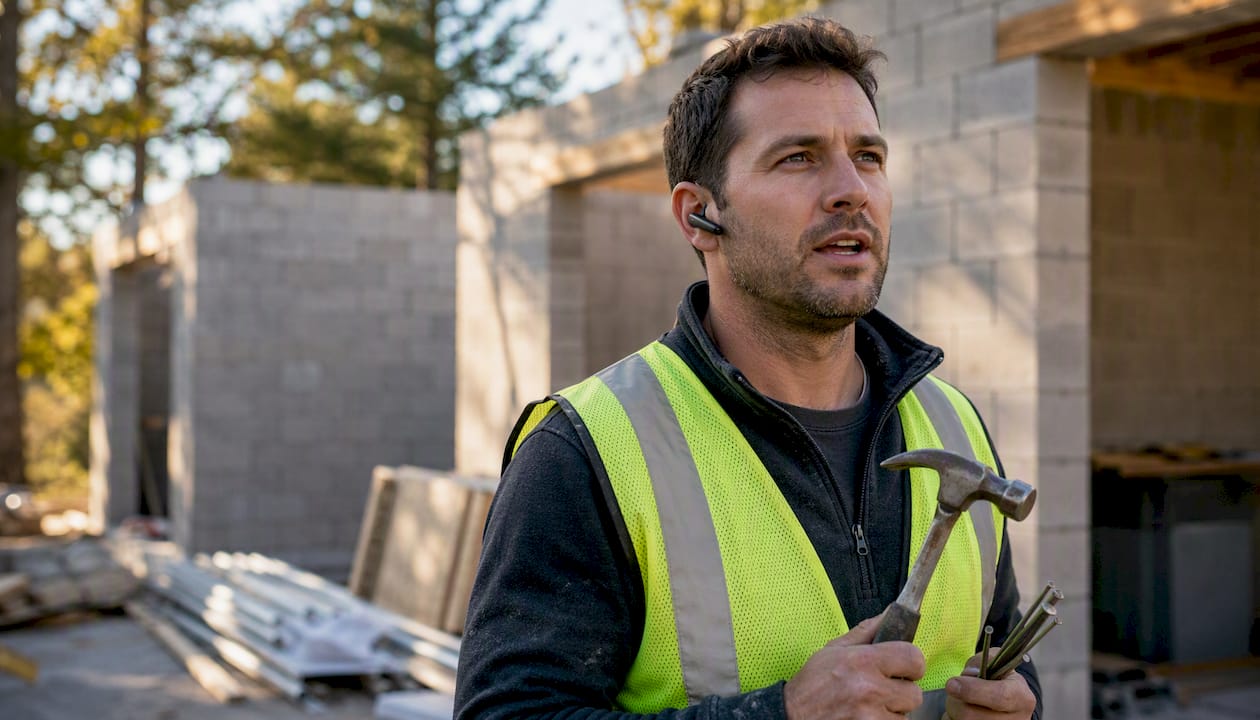
Voice‑based capture is genuinely useful here, not as a gimmick but as a practical fix for a real problem: hands full of tools, no laptop nearby, adrenaline still running. Describing what happened out loud, right after it happens, and having that turned into a structured record beats trying to remember the details three hours later when you’re finally back at a desk. It also means the factual, time‑stamped account exists before anyone’s had time to reshape it into a tidier story.
Treat every incident report as a chance to learn something about how the work actually gets done, not just a box to tick for the regulator. The businesses that get real value from their reporting procedure are the ones using it to find the systemic weak point before it causes a second, worse incident.
Where Ask Hayley fits into your WHS documentation
Ask Hayley is built for exactly the gap most trade businesses hit with incident reporting: you know what needs documenting, but you’re on site with your hands full and no time to sit down and type it up properly. Rather than chasing a template on your phone after the fact, you talk through what happened and Hayley turns it into structured, usable documentation, keeping your compliance paperwork consistent even when the day’s been chaos.

Beyond the immediate incident report, Ask Hayley’s safety and compliance documentation service builds you proper incident report templates, CAPA registers, and investigation frameworks tailored to your trade, so you’re not reinventing the wheel every time something goes wrong on site. If you’re managing this alongside quotes, invoicing, and missed calls, the broader Ask Hayley platform folds admin, compliance tracking, and reporting into the same voice‑first workflow. Get in touch through Askhayley to talk through what your business actually needs before your next incident forces the conversation.
Frequently asked questions
Do I need to report a near‑miss with no injury?
Yes, if it meets the dangerous incident criteria, such as an uncontrolled escape of a substance or a structural failure, even without anyone being hurt.
Who is responsible for notifying the regulator?
The PCBU carries this legal duty, though in practice it’s often delegated to a WHS officer or manager who makes the call and completes the paperwork.
Can I move equipment before the inspector arrives?
Only if it’s necessary to prevent further injury or protect people from ongoing risk; photograph the original position first wherever possible.
How is a workers compensation claim different from a WHS notification?
A WHS notification is a legal duty to your regulator about the incident itself; a workers compensation claim is a separate process the injured worker (or your business, on their behalf) lodges with your insurer to cover medical costs and lost wages. Both often draw on the same incident report and investigation records.
Does everyone involved in incident reporting need formal training?
Anyone conducting investigations should have basic training in root‑cause methods and objective interviewing; all workers should know the basic reporting steps and who to notify on site.
This article is general information, not a substitute for advice from a qualified lawyer. Consult a qualified legal professional about your own circumstances before acting on anything here.
Sources
Check your specific jurisdiction’s rules before relying on any general guidance, since notification timeframes and required forms differ slightly between states and territories.
- Incident reporting
- Report an incident
- Investigating and reporting incidents | SafeWork NSW
- Notifiable incident – WorkSafe – LGIRS
- Procedure: Work health and safety incident management
This article is general information for Australian workplaces and doesn’t replace advice from your state or territory WHS regulator or a qualified WHS professional. Confirm current notification timeframes and forms for your jurisdiction before relying on any figure here.


