


Keeping your HVAC system running reliably comes down to three habits: check and clean filters monthly, clear condensate drains before they block, and get coils and refrigerant inspected each season. Layer a licensed annual service on top and most breakdowns never happen.
Preventive maintenance schedules built around seasonal cadences work because Australian systems face two demanding peaks a year: a punishing summer cooling load and a cold-snap heating load. Every month, walk through this:
- Inspect and clean or replace air filters
- Check supply and return vents for obstruction
- Look for visible leaks, staining, or refrigerant oil around units
- Confirm the thermostat schedule matches occupancy
Pro Tip: Electrical and refrigerant work must go to a licensed electrician or refrigerant handler. Never open a sealed unit or touch live components yourself.
Key Takeaways
Reliable HVAC performance depends on monthly filter and drain checks, seasonal coil and refrigerant inspections, and an annual licensed service backed by signed, photo-verified records.
| Point | Details |
|---|---|
| Monthly basics | Check filters, vents, condensate drains, and thermostat settings every month without exception. |
| Seasonal prep | Clean coils and check refrigerant lines before summer; test heat pump mode and flues before winter. |
| Licensed trades only | Electrical, refrigerant, and combustion work must go to a licensed electrician or gas fitter. |
| Records protect you | Signed service reports and photo evidence support warranty claims and WHS due diligence. |
| Digital tools help | Ask Hayley captures maintenance calls and compliance documentation in one place for property teams. |
Where to find more Australian HVAC standards and guidance
- WorkSafe Queensland for WHS duty-holder obligations and recordkeeping
- Aeris’s standards overview for indoor air quality benchmarks and documentation practice
Table of Contents
- What should you check on your HVAC system every month?
- How do you prepare HVAC systems before summer?
- What heating checks matter before winter hits?
- How do you check ductwork and airflow for problems?
- Which HVAC checks require a licensed electrician?
- What does a licensed technician actually do during a service?
- How do you build a maintenance schedule and keep proper records?
- Why do digital checklists and photo records matter?
- Frequently asked questions
- Sources
What should you check on your HVAC system every month?
Monthly checks are the cheapest insurance you’ll ever buy for a system that costs thousands to replace. They take fifteen minutes and catch the small problems before they become compressor failures.
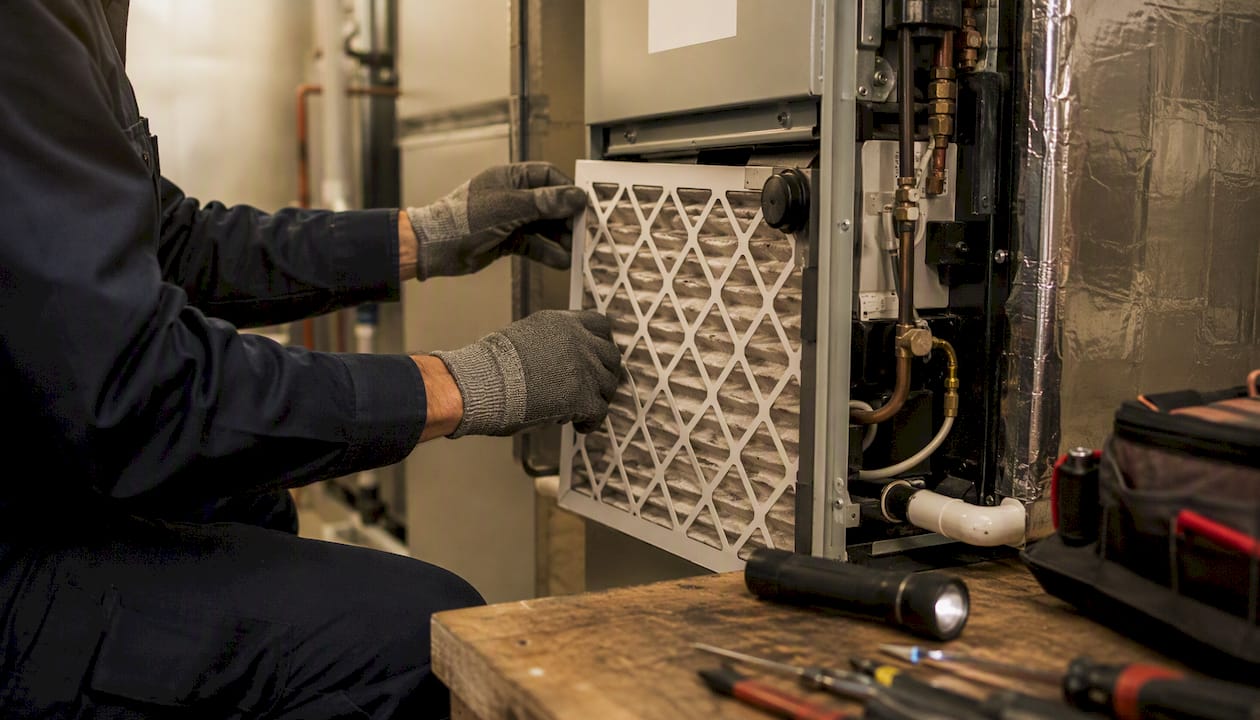
- Inspect and clean or replace filters. A clogged filter forces the fan to work harder and drags cooling capacity down, so check monthly and replace on the schedule your filter’s rating recommends.
- Check supply and return vents. Make sure furniture, stock, or renovation debris hasn’t blocked airflow anywhere in the space.
- Empty condensate pans and test the drain. Pour a cup of water down the drain line to confirm it flows freely. A blocked drain is one of the most common causes of water damage and unscheduled callouts.
- Scan for refrigerant oil or water stains. Oily residue near line sets often signals a slow refrigerant leak worth flagging to a technician.
- Verify thermostat settings and schedule. Confirm programmed times still match how the building is actually used.
Pro Tip: Photograph filters, vents, and drain pans each month and log the date, the technician or staff member’s name, and the asset ID. It costs nothing and becomes invaluable if you ever need to prove due diligence or lodge a warranty claim.
How do you prepare HVAC systems before summer?
Spring is when coil condition and refrigerant charge decide whether your system copes with 40-degree days or trips out at the worst possible moment. Work through this before the heat arrives:
- Clean condenser and evaporator coils of dust, leaf litter, and grime
- Clear at least half a metre of space around outdoor units so airflow isn’t restricted
- Run the fan and motor to listen for grinding, humming, or unusual vibration
- Check refrigerant line insulation for cracking or UV degradation
- Test the system under load, not just on a quick startup cycle
Capacitor testing, refrigerant pressure checks, and anything requiring the unit to be opened belongs to a licensed technician. If you suspect a refrigerant leak from an oily residue or a system that’s losing cooling capacity, stop and call a professional rather than topping up gas yourself.
Pro Tip: Always isolate power at the switchboard before working anywhere near an outdoor unit, and treat every capacitor as charged even when the system is switched off.
What heating checks matter before winter hits?
Heating components sit idle for six months and then get asked to run flat out on the coldest night of the year. That’s exactly when short cycling, dead motors, and gas faults surface.
- Inspect heat exchangers and burners on gas systems for corrosion or cracking
- Run a mode-switch test on heat pumps well before the first cold snap, not on the night you need heat
- Check flues are clear and confirm CO alarms are functioning where gas appliances are installed
- Inspect belts and motor bearings for wear or noise
Combustion safety checks and heat exchanger inspections on gas systems need a licensed gas fitter, full stop. Once the mode switch is done, run the system for twenty minutes and listen for short cycling or rattling, which usually points to a fault worth chasing down before the cold weather locks it in.
How do you check ductwork and airflow for problems?
Leaky ducts waste conditioned air before it ever reaches the room, and dirty ducts recirculate dust and mould spores through occupied spaces. Walk the accessible ductwork and registers looking for detached joints, crushed sections, visible dust buildup, or damp patches that suggest condensation. AS/NZS 3666 governs microbial control in air-handling systems, and it’s worth checking against if you spot mould around coils or drain pans.
- Check register and grille seals for gaps or dust staining
- Match filter ratings to your system’s manufacturer specifications
- Watch humidity levels; persistent condensation on ducts or vents signals a control problem, not just weather
Pro Tip: Before assuming you need more airflow, check whether diffusers are simply angled wrong or fan speed is set too low. It’s often a five-minute fix, not a duct redesign.
Which HVAC checks require a licensed electrician?
Some tasks are safe for property staff. Others are not, and the line matters for safety and for insurance.
- Tightening electrical connections, testing contactors, checking capacitors, and measuring running amps all require isolation and a licensed electrician
- Thermostat calibration and basic control settings are safe for property staff to manage day to day
- Anything involving live components, refrigerant circuits, or gas connections goes to a licensed trade
On commercial sites, safe isolation procedures and a permit-to-work system aren’t optional extras. WHS duty-holder obligations require documented evidence that plant and equipment maintenance was carried out safely and competently.
Pro Tip: Keep a simple sign-in sheet for anyone accessing plant rooms or rooftop units. It’s a small habit that makes WHS audits far less painful.
What does a licensed technician actually do during a service?
Briefing a contractor properly starts with knowing what a thorough visit should include. A proper professional service covers:
- Refrigerant pressure checks and leak detection
- Full electrical testing, including amp draws and contactor condition
- Deep clean of coils and blower wheel
- Performance readings: supply and return air temperatures, running amps, and system pressures
- Safety testing and a signed service report
Residential split systems generally need annual or biannual servicing depending on usage; commercial systems in heavier-use environments often warrant quarterly to six-monthly visits. Documented, periodic maintenance is frequently a condition of warranty validity, so always request a signed report listing the asset ID, readings taken, parts replaced, and the technician’s licence details.
Pro Tip: File every service report against the asset, not just in a general folder. When something fails, you want to pull up its full history in seconds.
How do you build a maintenance schedule and keep proper records?
A workable schedule doesn’t need to be complicated. It needs to happen on time and leave a trail.
| Frequency | What to log |
|---|---|
| Monthly | Date, asset ID, filter/vent/drain status, staff name |
| Pre-season (spring/autumn) | Coil condition, refrigerant checks, defects found, technician name |
| Annual | Full service report, licence number, readings, next due date |
Free templates exist for exactly this purpose, and digital versions add automatic reminders, photo evidence, and a searchable audit trail. Keep records for the life of the warranty or lease obligation, whichever is longer, and store them where you can retrieve them fast if a dispute or claim arises.
Why do digital checklists and photo records matter?
Paper checklists get lost, smudged, or filled in from memory a week later. Digital, photo-verified checklists create a timestamped record that stands up to scrutiny.
- Photo evidence proves work was actually done, not just ticked off
- Timestamped entries speed up warranty claims and reduce disputes with tenants or contractors
- Logged technician licence numbers and IAQ complaint records support audit trails in regulated commercial settings
Pro Tip: Start small. Photograph just the filter and drain each month for eight weeks before rolling out a full digital system. You’ll see the value before you invest more time.
A facility manager’s honest take on checklists
A completed checklist has saved me more diagnostic hours than any single tool in the plant room. When a technician arrives and sees a logged history, they skip the guesswork and go straight to the fault. If you manage more than one site, start logging now. Even a rough spreadsheet beats memory.
A simpler way to capture HVAC maintenance requests
Most property teams juggle maintenance calls, contractor bookings, and compliance paperwork across three different systems, and something always falls through the cracks. Digital checklist apps and contractor portals can help with parts of that picture, but they rarely handle the phone call that started it all.

Ask Hayley answers those calls when you can’t, captures the maintenance request on the spot, and keeps a record attached to the job so nothing gets lost between the tenant’s call and the technician’s visit. It also handles the safety and compliance documentation side, so signed service reports and checklists sit in one place instead of scattered across inboxes and glove boxes. If you’re tired of chasing paperwork after every service visit, have a look at how Ask Hayley works and see whether it fits how your properties actually run.
Frequently asked questions
How often should I service my HVAC system in Australia?
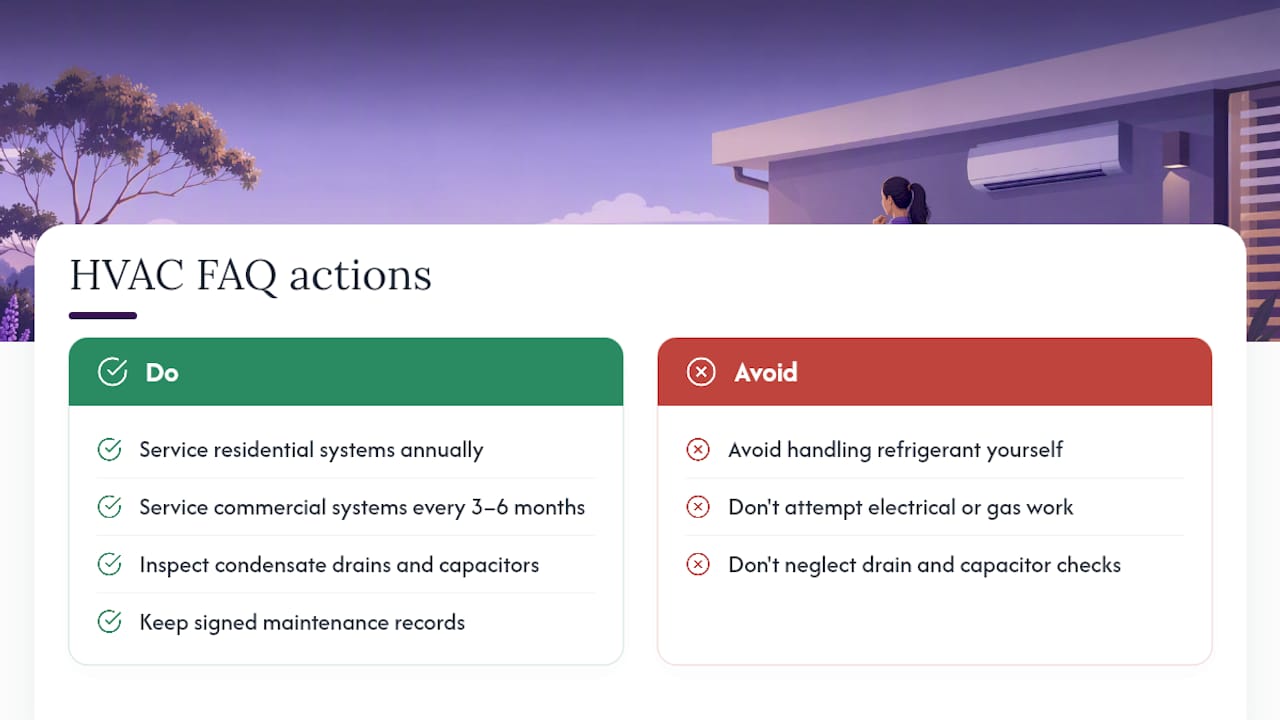
Most residential split systems need servicing annually or biannually, while commercial systems in heavier-use environments often need quarterly to six-monthly visits depending on load and environment.
What’s the difference between DIY maintenance and a professional service?
DIY covers filters, vents, drains, and visual checks. Anything involving refrigerant, electrical components, or gas connections requires a licensed technician.
Do I really need to keep maintenance records?
Yes. Signed records support WHS due diligence, protect your warranty, and speed up any insurance or dispute process significantly.
What’s the biggest cause of mid-season HVAC failure?
Blocked condensate drains and neglected capacitor checks are among the most common causes property owners miss between services.
Can I check refrigerant levels myself?
No. Refrigerant handling requires a licensed technician with the right equipment to check pressures and detect leaks safely.
Sources
- Work health and safety laws | WorkSafe Queensland
- Understanding your air conditioner’s warranty | Fused Air
- How often to service ducted heating | NK Air
- Australian standards for HVAC maintenance and indoor air quality | Aeris


