


Six topics you can stand up right now, before the shift starts:
- Slips, trips and falls on the same level — Point to the three wettest or most cluttered spots on site and ask the crew to name one fix each before they move off.
- Working at heights and fall protection — Hold up the harness or edge-protection gear you’re using today and confirm everyone knows the rescue plan if someone goes over.
- Heat illness and hydration — Check that water is available reasonably close to every work area and remind the crew that thirst is already a sign of mild dehydration, per Better Health Victoria’s hydration guidance.
- Manual handling and body mechanics — Demonstrate the lift you’ll be doing most today and ask who has a sore back or shoulder the team should know about.
- Near-miss discussion — Ask: “Has anyone seen something go wrong this week, even if nothing happened?” Record the answer and the control you agreed on.
- Stop work authority — Confirm aloud that every person on site has the right and the responsibility to stop work if something feels unsafe, with no comeback.
Before you move off: record the date, location, topic, a one-line summary of the key point, and every attendee’s name and signature. The SafeWork NSW guide provides a ready-made attendance template you can print and keep on site.
Key takeaways
Short, site-specific toolbox talks with documented attendance are the single most practical tool a supervisor has for reducing incidents and passing audits.
| Point | Details |
|---|---|
| Pick a site-specific topic | Match the talk to today’s tasks, weather and crew using the 3 P’s: Project phase, Personnel, Pre-conditions. |
| Keep it under 10 minutes | A conversational 5–10 minute structure, as recommended by SafeWork SA, outperforms longer scripted sessions. |
| Document attendance immediately | Record date, location, topic, key points and signatures at the time of the talk, not at the end of the day. |
| Use near-misses as teaching material | A real, recent event from your site engages crews and normalises hazard reporting. |
| Ask Hayley handles the paperwork | Ask Hayley’s safety and compliance documentation service captures attendance logs and toolbox talk records audit-ready, hands-free. |
Table of Contents
- 25 practical toolbox talk topics grouped by category
- How to pick the right topic for today
- How to run a 5-minute toolbox talk and keep audit-ready records
- Five short scripts you can read aloud right now
- Australian regulator resources you can download today
- Why tailored talks and near-miss discussions actually work
- What actually lands with crews
- Keeping your toolbox talk records audit-ready
- Australian regulator pages and downloads to bookmark
- Sources
25 practical toolbox talk topics grouped by category
Use this bank to plan daily or weekly sessions. Each entry gives you a one-line prompt to read aloud and a quick control or discussion question. Rotate topics to match the season, the phase of work, and the crew on the day.
Falls and heights
- Harness inspection — “Show me your harness before we clip on today.” Control: pre-use inspection checklist, retire any harness with frayed webbing or a damaged buckle.
- Scaffolding and edge protection — “What’s the maximum gap we’re allowed between planks?” Control: confirm planks are fully decked, guardrails are in place and the scaffold tag is current.
- Ladder safety — “When did you last check the feet on this ladder?” Control: three points of contact, correct angle (1:4 ratio), secured at the top.
- Roof work and skylights — “Can you see every skylight from where you’re standing?” Control: cover or cage all skylights before work begins; never assume a skylight will hold weight.
Equipment and plant
- Pre-start checks on plant and machinery — “What do you check before you start the excavator?” Control: walk-around inspection, fluid levels, horn and reverse alarm confirmed.
- Electrical safety and isolation — “Who controls the isolation point for today’s task?” Control: lock-out/tag-out procedure, test before touch.
- Silica dust and respiratory hazards — “Are we cutting, grinding or drilling concrete today?” Control: wet cutting or on-tool extraction, P2 respirator fitted and face-seal checked. (Industry-specific: construction, masonry, civil.)
- Asbestos awareness — “What do you do if you hit something that looks like fibro?” Control: stop work, do not disturb, report to supervisor, contact a licensed assessor. (Relevant year-round in renovation and demolition work.)
Manual handling and ergonomics
- Safe lifting technique — “What’s the heaviest single lift on today’s task list?” Control: team lift for anything over 16 kg, use mechanical aids where available.
- Repetitive strain and awkward postures — “Are you working above shoulder height for more than 30 minutes today?” Control: rotate tasks every 30–45 minutes, adjust work height where possible.
- Fatigue and alertness — “Did everyone get at least six hours’ sleep?” Control: flag fatigue to the supervisor before starting high-risk tasks; avoid relying on caffeine alone to stay alert.
Health and environment
- Heat stress (Summer priority) — “What’s the temperature forecast for 2 PM today?” Control: schedule heavy work before 11 AM, mandatory shade breaks, buddy system for heat symptoms.
- Cold and wet conditions (Winter priority) — “Is anyone working in wet gear for more than two hours?” Control: dry change of clothes on site, waterproof PPE, monitor for shivering.
- Wildlife risks (Outdoor and rural work) — “Has anyone seen a snake or wasp nest near the work zone?” Control: check before disturbing ground cover, know the location of the first-aid kit and the nearest hospital.
- UV exposure and sun safety — “Is everyone wearing SPF 50+ and a hat today?” Control: UPF-rated clothing, reapply sunscreen at lunch, schedule shade breaks.
- Chemical handling and SDS — “Where is the Safety Data Sheet for the product we’re using today?” Control: SDS within reach, correct PPE matched to the chemical, spill kit accessible.
Behaviour and culture
- Psychosocial hazards and poor support — “Has anyone felt unsupported, pressured or isolated on this job?” Control: open-door reporting, refer to EAP if available. Safe Work Australia classifies poor support as a notifiable psychosocial hazard.
- Occupational violence and aggression — “Have any of you dealt with aggressive behaviour from a client or member of the public this week?” Control: de-escalation steps, report all incidents, no lone-worker situations in high-risk locations. See the WorkSafe WA code of practice for controls.
- Distraction and mobile phone use — “When is it safe to check your phone on this site?” Control: phones on silent in work zones, designated break areas for calls.
- Near-miss reporting culture — “What stops people from reporting near-misses here?” Control: no-blame reporting system, acknowledge every report within 24 hours.
Emergency and permits
- Emergency evacuation and muster points — “Where is the nearest muster point and who calls 000?” Control: walk the route before starting, confirm the first-aid officer is on site.
- Permit to work — confined spaces — “Has the permit been signed and the atmosphere tested?” Control: no entry without a valid permit, standby person in position, rescue equipment ready.
- Hot work and fire prevention — “Is there a fire extinguisher within 10 metres of the hot work area?” Control: remove combustibles, wet down the area, 30-minute fire watch after work stops.
- Working in traffic and exclusion zones — “Can every driver see you from their cab?” Control: high-vis PPE, spotter for reversing plant, exclusion zone marked and enforced.
- Job Safety Analysis (JSA) review — “Has everyone read and signed the JSA for today’s task?” Control: walk through the top three hazards on the JSA before work starts.
Seasonal rotation tip: Prioritise heat stress, UV and wildlife topics from November through March. Shift to cold conditions, fatigue and electrical safety in the cooler months. Silica and asbestos awareness belong in every quarter for construction and renovation crews.
How to pick the right topic for today
Choosing a relevant topic takes about two minutes if you use the 3 P’s framework: Project phase, Personnel, and Pre-conditions. Add one more check for recent incidents and you have a short, audit-friendly selection process.
- Project phase — What stage is the job at? Excavation, framing, fit-out and commissioning each carry different hazards. Match the topic to what the crew is physically doing today, not what they did last week.
- Personnel — Who is on site? New starters, subcontractors and workers returning from leave need more foundational topics. Experienced crews can go deeper on controls and near-miss analysis.
- Pre-conditions — What are the weather, ground conditions and site layout doing today? A 38-degree forecast makes heat stress the obvious pick. Wet ground after overnight rain shifts the priority to slips and plant stability.
- Recent incidents and near-misses — Check the incident log before the talk. A near-miss from yesterday is the most powerful teaching material you have. Workers engage immediately when the story is real and local.
Safe Work Australia’s guidance on leadership and culture is clear: consultation is not optional. Ask the crew what they have noticed before you decide on the topic, not after.
Pro Tip: Avoid picking a topic from a generic list without checking the day’s tasks first. A talk on confined spaces means nothing to a crew doing external cladding. Site-specific relevance is what turns a compliance tick into a real conversation.
For supervisors who want to build a year-round schedule, SafetyFolio’s 100-topic library recommends tiering topics across high-frequency hazards, seasonal priorities and annual items so nothing critical gets skipped.
How to run a 5-minute toolbox talk and keep audit-ready records
SafeWork SA recommends a conversational structure of around 10 minutes and stresses that attendance must be documented at the time of the talk, not reconstructed later. For most sites, a tight 5–10 minute window works well when you follow this sequence:
- Minute 1 — Why it matters today: State the topic, name the specific task or condition that makes it relevant right now, and tell the crew the one action you want them to take.
- Minutes 2–3 — Story or near-miss: Share a real incident from this site or a recent industry event. Keep it brief. The more specific the detail, the more the crew listens.
- Minutes 4–5 — Hazards and controls: Name the top two or three hazards and the control for each. Hold up the relevant PPE or point to the physical control on site.
- Minutes 6–7 — Equipment demo (if relevant): Show, don’t just tell. A 60-second demonstration of correct harness fit or correct lifting grip lands harder than a description.
- Minutes 8–10 — Crew input: Ask an open question and wait for the answer. This is where the real hazard intelligence surfaces.
Attendance and record template
The SafeWork NSW guide sets out the minimum documentation for audit purposes. Capture these fields at the time of the talk:
| Field | What to record |
|---|---|
| Date | Day, month, year of the talk |
| Start time | Time the talk began |
| Location | Site name and specific work area |
| Topic | Name of the hazard or subject covered |
| Key points | Two to three sentences summarising what was discussed |
| Action items | Any follow-up tasks assigned, with a responsible person named |
| Attendees | Full name and signature of every person present |
Keep the completed record in the site safety file. For audits, inspectors look for consistency: a record for every working day, not just the days something went wrong.
Three open questions that get crews talking
- “Has anyone seen this hazard cause a problem before, on this site or another?”
- “What would make this task safer right now, without slowing us down?”
- “If something went wrong in the next hour, what would it be?”
Pro Tip: Close every talk by confirming stop work authority aloud: “If any of you see something unsafe today, you stop the job. No questions asked.” That one sentence converts the talk from a compliance exercise into active risk management.
Five short scripts you can read aloud right now
Each script runs 3–5 minutes at a normal speaking pace. Read them as written or adapt the details to your site.
Script 1: Slips, trips and falls on the same level
"Today’s topic is slips, trips and falls. They’re the most common cause of injury on Australian worksites, and most of them happen in the first or last hour of the shift when people are rushing.
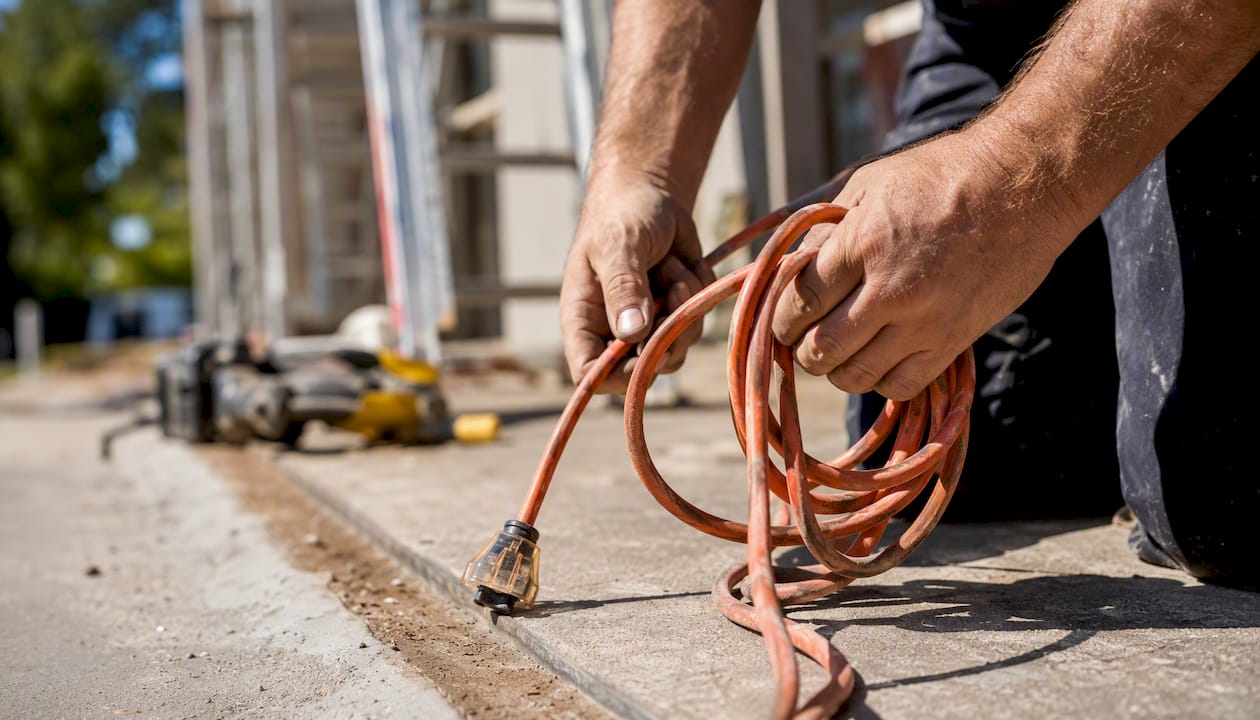
Last week on a similar site, a worker tripped on an extension lead crossing a walkway and fractured his wrist. The lead had been there for three days and nobody had moved it.
Two controls: first, every lead, hose and cable gets routed around the work area, not across it. Second, if you see a trip hazard, fix it or flag it before you walk past it.
Question for the crew: What’s the one trip hazard on this site that we keep walking past? Let’s fix it today.
Record this talk: date, location, topic, attendees and signatures."
Script 2: Working at heights
"Today we’re talking about working at heights. Falls from height remain one of the leading causes of fatality on Australian construction sites.
Picture this: a worker steps onto an unsecured plank to reach a fitting. The plank shifts, he grabs the rail, the rail isn’t fixed. He’s lucky. Not everyone is.
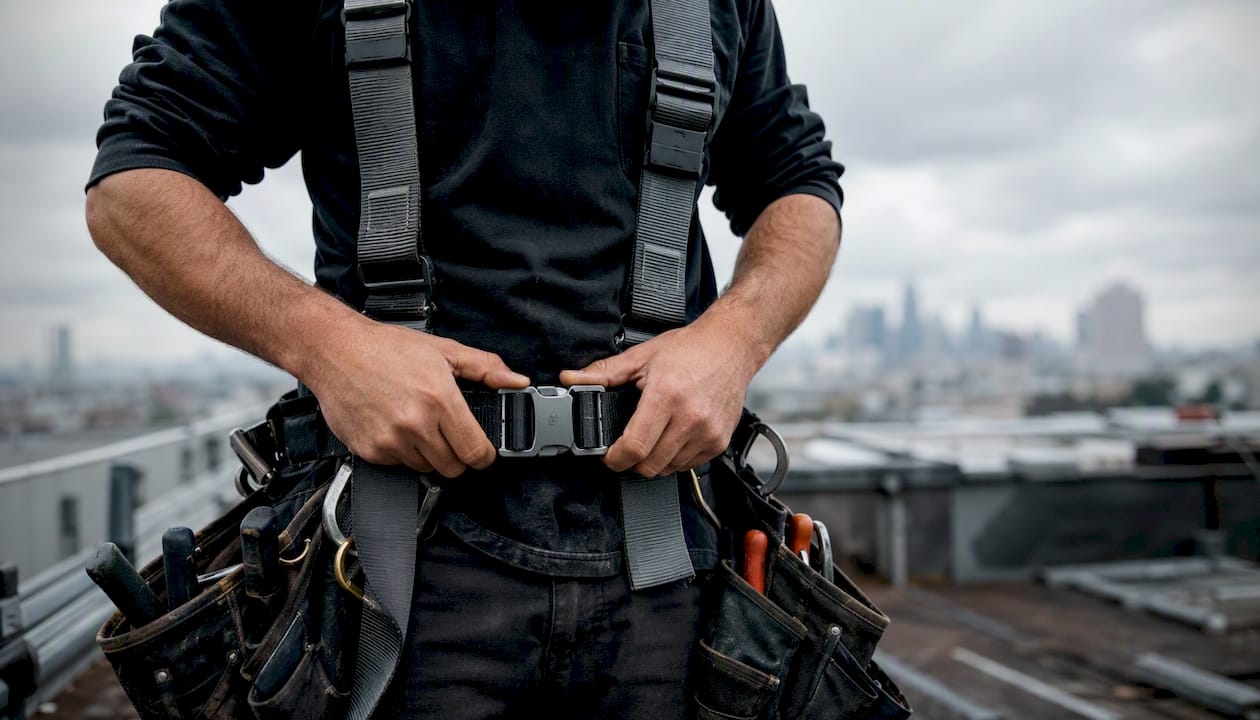
Two non-negotiables: your harness goes on before you leave the ground, and you check the anchor point before you clip on. No exceptions.
Question: Who can show me where the nearest rescue kit is and how to use it?
Document attendance before the crew moves off."
Script 3: Heat illness
"Heat illness is today’s topic. When the temperature hits 35 degrees or above, the risk of heat exhaustion and heat stroke rises sharply, especially for anyone wearing PPE or working in direct sun.
Signs to watch for in yourself and your mates: heavy sweating, dizziness, nausea, stopping sweating when it’s still hot. That last one is a medical emergency.
Two controls: drink at least 250 mL of water every 20 minutes during heavy work, and schedule your hardest tasks before 11 AM. Buddy up and check on each other.
Question: Where is the nearest shade and water station from where you’re working right now?
Sign the attendance sheet before you start."
Script 4: Near-miss discussion
"Today’s talk is about near-misses. A near-miss is any event where someone could have been hurt but wasn’t. They are free lessons. Every one we ignore is a future injury waiting to happen.
I want to hear from you: has anyone seen something go wrong this week, even if nothing happened? [Pause and listen.] That’s exactly the kind of thing we need to know about.
When you report a near-miss, you’re not dobbing anyone in. You’re stopping the next person from getting hurt. Report it verbally to me or in writing, and I’ll make sure it gets actioned within 24 hours.
Question: What would make it easier for you to report a near-miss on this site?
Record the near-miss discussed and the agreed control in today’s toolbox talk record."
Script 5: Mental health and poor support
"Today’s topic is mental health and feeling supported at work. Safe Work Australia recognises poor support as a psychosocial hazard with real safety consequences. Feeling isolated, pressured or unsupported affects concentration and decision-making, which increases the risk of physical injury.
You don’t have to be struggling to find this relevant. Noticing when a workmate seems off is a safety skill.
Two actions: if you’re not coping, talk to me or the site manager before it affects your work. If you notice a mate struggling, check in privately. Our EAP number is.
Question: Does everyone know how to access the Employee Assistance Programme?
Record attendance and note that psychosocial hazards were discussed."
Australian regulator resources you can download today
These are free, authoritative and built for Australian workplaces. Bookmark them and keep printed copies in the site safety file.
- SafeWork SA — Toolbox safety talks: Practical guidance on structure, timing and documentation. Includes advice on running a conversational 10-minute talk and recording attendance. Suited to all industries.
- SafeWork NSW — Guide to toolbox talks (PDF): A printable guide with templates for attendance records and topic selection. Directly usable in supervisor files for audits.
- Safe Work Australia — Leadership and culture: Guidance on consultation, worker participation and safety culture. Useful for supervisors building a talk programme that meets WHS consultation obligations.
- Safe Work Australia — Poor support and mental health: Topic-specific guidance on psychosocial hazards. Use this to prepare mental health and wellbeing talks with confidence.
- WorkSafe WA — Code of practice: Violence and aggression at work: Controls and obligations for managing occupational violence. Relevant for retail, health, community services and any site with public access.
- NIOSH/CPWR — Construction toolbox talks: A US-based library covering electrical safety, fall prevention, PPE and more. Content is high quality; adapt terminology and regulatory references to Australian standards before use.
For supervisors running talks across multiple industries, the MOGHQ guide on facilitating short workshops offers practical engagement techniques that translate well to toolbox talk settings.
Why tailored talks and near-miss discussions actually work
Generic safety talks delivered from a laminated sheet rarely change behaviour. The evidence from Australian regulators is consistent: short, site-specific, conversational sessions outperform scripted presentations every time.
SafeWork SA’s guidance recommends a conversational structure precisely because it invites workers to contribute, which surfaces hazards that supervisors haven’t spotted. When workers are asked where they’ve seen things go wrong, they report hazards earlier and more accurately than when they’re simply told what to watch for.
Near-miss discussion is particularly effective. Using a real, recent event as the core of a talk makes the message tangible. Workers recognise the scenario, connect it to their own experience, and are more likely to act on the control. It also normalises reporting, which is one of the strongest leading indicators of a healthy safety culture.
Safe Work Australia’s leadership and culture guidance is direct: leadership behaviour and genuine consultation materially affect safety outcomes. A supervisor who asks questions and listens to the answers during a toolbox talk is demonstrating exactly the kind of leadership that reduces incidents.
For audits, documentation is the proof. Inspectors reviewing a workplace safety audit checklist or OHS audit checklist will look for consistent records showing the date, topic, attendees and any actions taken. A well-kept toolbox talk log is one of the simplest ways to demonstrate an active safety management system.
What actually lands with crews
Most supervisors underestimate how much the format matters. A talk read from a printout with no eye contact loses the crew in the first 30 seconds. The ones that stick are the ones that feel like a real conversation.
Two adjustments that make an immediate difference: rotate who leads the talk. When a crew member runs the session, the rest of the crew listens differently. And use actual equipment during the talk. Holding up a frayed harness strap and asking “Would you trust your life to this?” is more effective than any slide or script.
Close with stop work authority, every time. It takes 10 seconds and it signals that the talk was about real risk, not paperwork.
Keeping your toolbox talk records audit-ready
Running a solid talk is one thing. Keeping the paperwork straight is another, and that’s where a lot of trade businesses fall short at audit time.
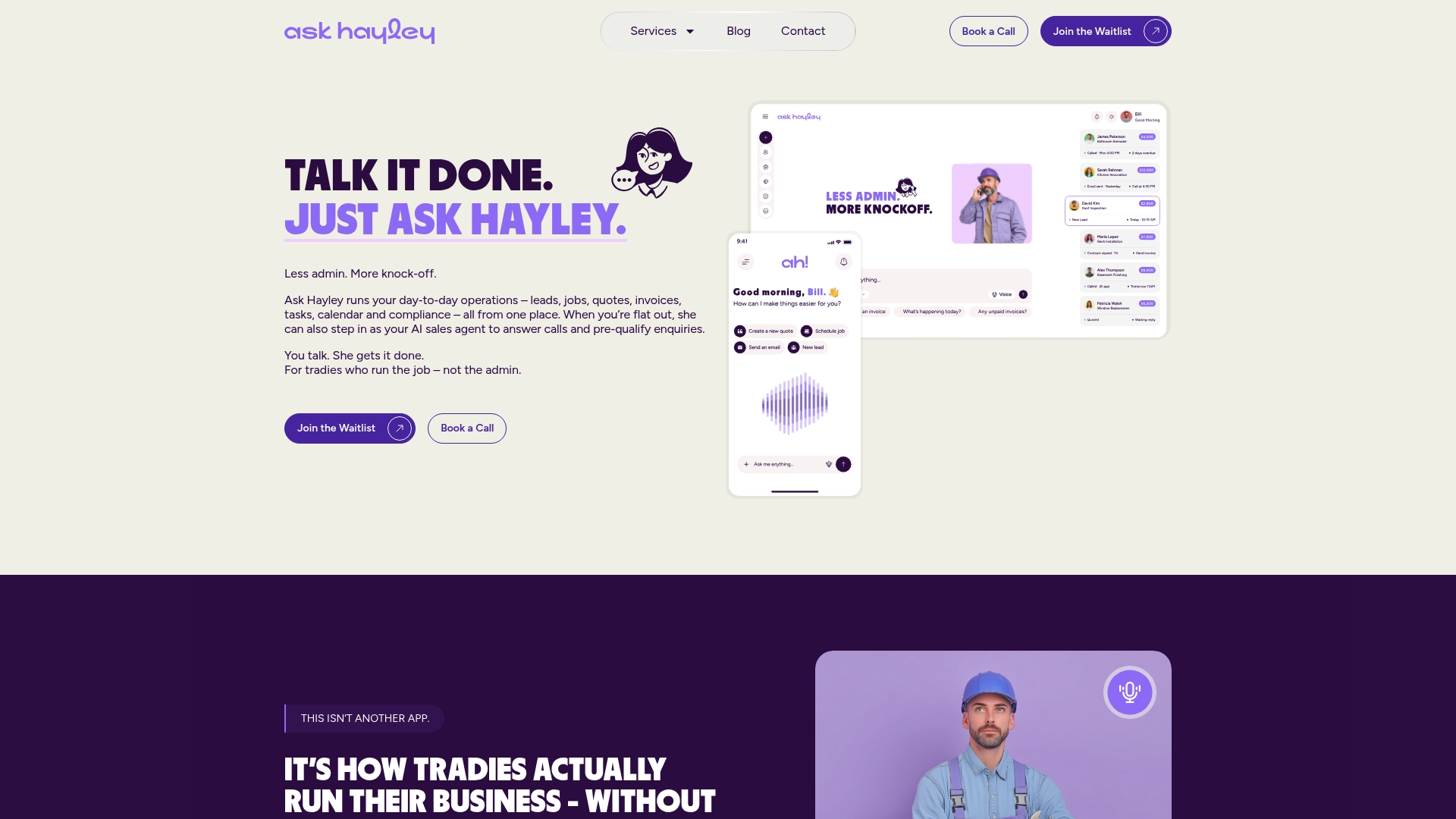
Ask Hayley’s safety and compliance documentation service takes the admin off your plate. You talk, Hayley captures it. Attendance logs, topic records and action items are stored in a format that’s ready to hand over at any audit, without you sitting at a screen after hours.
- Voice-driven logging: Record attendance and key points on the go, hands-free, directly from site.
- Printable, audit-ready templates: Custom attendance sheets and toolbox talk packs built to your industry and site requirements.
- Compliance documentation support: From safety management plans to toolbox talk schedules, Ask Hayley’s professional services team produces the documents you need to win tenders and pass audits.
Ready to get your safety documentation sorted? Visit Ask Hayley’s services page to see how it works, or go straight to the safety and compliance documentation page to get started.
Australian regulator pages and downloads to bookmark
Keep these links saved and print the PDFs for your site safety file.
- SafeWork SA — Toolbox safety talks: Structure, timing and documentation guidance for all industries. The attendance record advice here is directly usable for OHS audit checklists.
- SafeWork NSW — Guide to toolbox talks (PDF): Printable attendance template and topic selection guidance. The go-to document for supervisors building a workplace safety audit checklist.
- Safe Work Australia — Leadership and culture: Consultation obligations and culture guidance for supervisors running weekly toolbox talks.
- Safe Work Australia — Poor support and mental health: Psychosocial hazard guidance for preparing mental health toolbox talk topics.
- WorkSafe WA — Code of practice: Violence and aggression: Controls for occupational violence; relevant for safety inspection checklists in client-facing roles.
- NIOSH/CPWR — Construction toolbox talks: A broad topic library covering electrical, fall prevention and PPE. Adapt content to Australian WHS terminology before use on Australian sites.
- SafetyFolio — 100 toolbox talk topics (free PDF): Useful for building a year-round schedule with tiered topic rotation.
Save the attendance template from the SafeWork NSW PDF and keep a printed stack in the site office. An auditor who sees a complete, consistent record for every working day will have nothing to question.
Sources
- Toolbox Talks: Construction Toolbox Talks | NIOSH
- Toolbox safety talks
- Poor support and workplace mental health | Safe Work Australia
- Leadership and culture | Safe Work Australia
- Guide to toolbox talks | SafeWork NSW
- Code of practice: Violence and aggression at work | WorkSafe WA


