
If your work triggers any of the 18 High Risk Construction Work categories under Australia’s WHS Regulations, you legally need a Safe Work Method Statement (SWMS) before you start. A Job Safety Analysis (JSA) is a useful tool, but it cannot replace a SWMS where the law requires one.
Quick verdict:
- Legal requirement: A SWMS is mandatory for High Risk Construction Work (HRCW). A JSA is voluntary best practice.
- Practical use: Use a SWMS for HRCW tasks; use a JSA for routine, lower-risk tasks or as a daily pre-start tool.
- Immediate action: Before work starts, ask yourself whether the task falls under an HRCW category. If it does, stop and confirm your SWMS is site-specific and signed before anyone picks up a tool.
Table of Contents
- What is a SWMS and when does Australian law require one?
- What is a JSA and where does it fit?
- SWMS vs JSA at a glance
- How to decide on site: SWMS or JSA?
- How to prepare a compliant SWMS: step-by-step
- A simple JSA template for day-to-day tasks
- How SWMS and JSA work together on a live site
- How digital tools help you manage SWMS and JSA workflows
- Common mistakes that trigger failed inspections
- Key takeaways
- Why the paperwork matters more than most tradies think
- Ask Hayley handles your compliance documentation so you can focus on the job
- Useful sources
What is a SWMS and when does Australian law require one?
A Safe Work Method Statement is a statutory document. Under the WHS Regulations, a PCBU (person conducting a business or undertaking) must prepare a SWMS before any HRCW begins. There is no discretion here.
A compliant SWMS must identify the HRCW being performed, list the hazards and associated risks, describe the control measures, and explain how those controls will be implemented, monitored and reviewed. Worker sign-off and consultation are also expected.
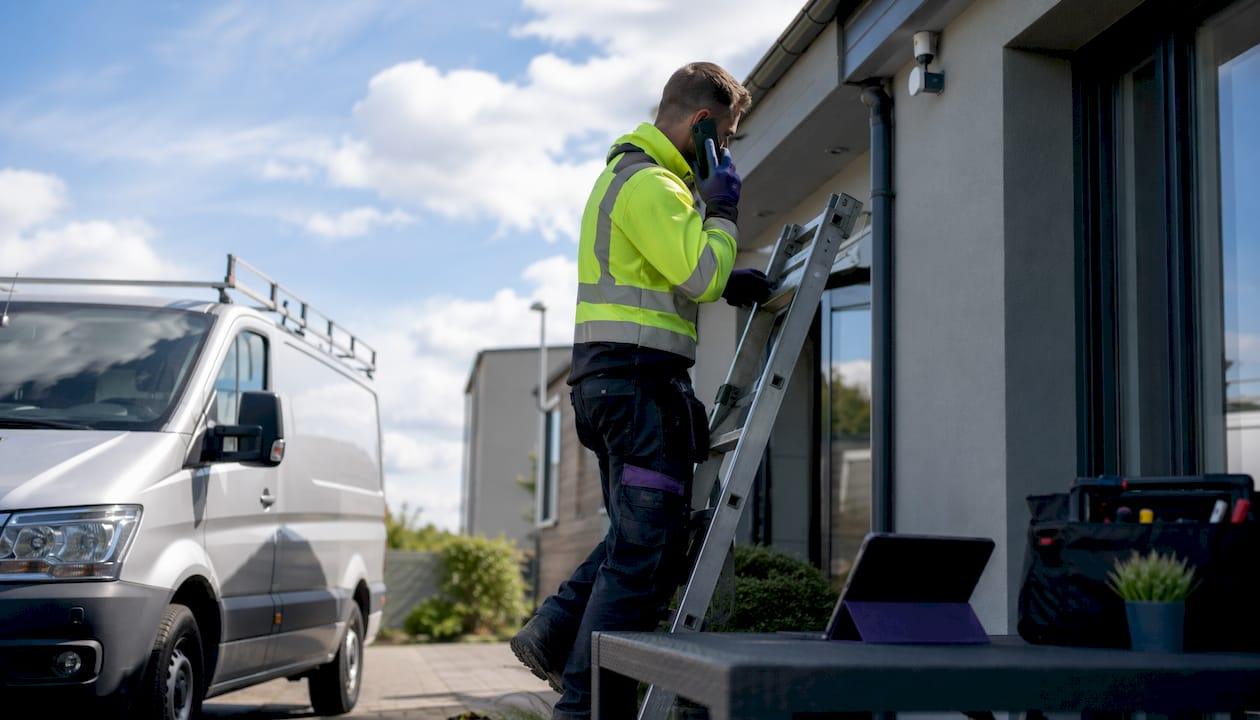
HRCW categories relevant to most tradies include working at heights above two metres, confined space entry, work near energised electrical installations, demolition, scaffolding, and excavation. One SWMS can cover multiple HRCW activities on the same site, provided it remains site-specific.
Failing to have a compliant, site-specific SWMS before HRCW begins is a breach of WHS Regulations. Inspectors can issue stop-work orders, fines, and refer the matter for prosecution of the PCBU. A generic template that has not been reviewed and updated for the actual site, equipment, and workers on the day does not meet the legal standard.
What is a JSA and where does it fit?
A Job Safety Analysis (sometimes called a JHA or JSEA) is a voluntary, best-practice tool that breaks a task into steps, identifies hazards at each step, and records controls. It carries no legislative mandate for specific tasks.
Tradies typically use a JSA for:
- Pre-start checks at the beginning of a shift
- Toolbox talks to walk the crew through the day’s tasks
- Routine maintenance or lower-risk work where no HRCW category applies
- Training new workers on task-level hazard awareness
- Step-by-step hazard identification when conditions change mid-job
The JSA is genuinely useful. It builds safety awareness, gets workers thinking before they act, and creates a record of daily consultation. What it cannot do is satisfy your legal obligation when the work is HRCW. A JSA does not carry the same regulatory weight as a SWMS, and no amount of renaming changes that.

SWMS vs JSA at a glance
| SWMS | JSA | |
|---|---|---|
| Legal status | Mandatory for HRCW under WHS Regulations | Voluntary best practice |
| Scope | Site-specific, covers HRCW activities | Task-level, any hazardous task |
| When to prepare | Before HRCW starts | Before any task begins (as needed) |
| Who prepares it | PCBU or nominated competent person | Supervisor or worker |
| Worker sign-off | Required | Recommended |
| Consequence of absence | Stop-work order, fines, prosecution | No direct legal penalty |
A JSA cannot substitute for a SWMS on HRCW. Regulators check for the mandated structural components of a SWMS, and a document labelled “JSA” that lacks those components will fail inspection regardless of how thorough it looks.
How to decide on site: SWMS or JSA?
Ask these questions before work starts:
- Does this task involve working at heights, confined spaces, demolition, scaffolding, excavation, or energised electrical work?
- Has the principal contractor asked for a SWMS before you start?
- Are there site conditions (unstable ground, overhead lines, nearby traffic) that push this into HRCW territory?
If you answer yes to any of these, you need a SWMS. A JSA alone will not cover you.
Trade examples: A roofer working above two metres needs a SWMS. A painter working at ground level on interior walls can run a JSA as their pre-start. An electrician working near live switchboards needs a SWMS; the same electrician replacing a power point in a de-energised board can use a JSA.
Pro Tip: If you are unsure on site, stop. Contact the principal contractor or your PCBU before work begins. Checking the relevant WHS Regulations or Safe Work Australia guidance takes minutes; a stop-work order costs far more.
How to prepare a compliant SWMS: step-by-step
- Identify the HRCW. Confirm which of the 18 HRCW categories apply to the task.
- Gather site-specific information. Walk the site, note actual hazards, equipment, and worker details. A generic template is a starting point only.
- List hazards and controls. For each hazard, record the control measure and how it will be implemented, monitored, and reviewed.
- Consult workers. Talk to the people doing the work. Their input is both legally expected and practically valuable.
- Get sign-off. Workers must sign the SWMS before HRCW begins.
- Provide to the principal contractor. On projects over $250,000, the principal contractor must receive the SWMS before work starts.
- Keep it on site. The SWMS must be accessible at the workplace, physically or electronically.
- Review when conditions change. If the site, equipment, or method changes, stop and revise the SWMS before continuing.
If work is not being carried out in accordance with the SWMS, it must stop immediately until the document is revised and re-communicated to workers.
Drafting a SWMS from scratch typically takes one to three hours for a straightforward task. Having a professional prepare it costs more upfront but reduces the risk of a non-compliant document costing you a tender or a fine.
Pro Tip: Even when using an AI-generated or templated SWMS, you must customise it for the actual site. Add the specific address, the equipment on the day, the workers present, and any site-specific hazards. An unchanged template is not compliant.
A simple JSA template for day-to-day tasks
Run through these fields before each task:
- Task name: What are you doing?
- Steps: Break the task into sequential actions.
- Hazards per step: What could go wrong at each step?
- Controls: How will you prevent or reduce each hazard?
- PPE required: What personal protective equipment is needed?
- Responsible person: Who is accountable for each control?
- Sign-off: Worker and supervisor signatures, date and time.
Use this at your pre-start or toolbox talk. For routine tasks, a verbal run-through recorded on a sign-off sheet is often enough. For unfamiliar or higher-risk tasks, write it out in full. And remember: if the task turns out to be HRCW, the JSA does not replace your SWMS obligation.
How SWMS and JSA work together on a live site
Many workplaces use both documents as part of the same safety system. The SWMS sets the legal framework for the HRCW scope; JSAs and pre-starts translate that framework into daily safe work behaviour.
A practical workflow looks like this: prepare the SWMS for the HRCW activities before mobilisation, run site inductions using the SWMS as the reference document, then conduct a JSA or pre-start each morning to confirm the day’s tasks align with the controls in the SWMS. When site conditions change, update the SWMS and brief workers before continuing.
On a roof replacement project, for example, the SWMS covers the HRCW scope: work at heights, scaffolding, and any demolition. The daily JSA covers the sequence of tasks for that day’s crew, confirming PPE, edge protection, and access routes are in place before anyone climbs. Together, they create a documented record of both legal compliance and ongoing worker consultation.
Keeping both documents accessible and up to date also supports mobile workforce timesheet and sign-off workflows, giving you a clean audit trail if a regulator or principal contractor asks for records.
How digital tools help you manage SWMS and JSA workflows
Managing compliance paperwork on a mobile worksite is genuinely hard. Ask Hayley is built for exactly this situation. Using voice prompts, you can capture site conditions, update SWMS details, and trigger daily JSA pre-starts without sitting at a desk.
A practical digital workflow:
- Start with a compliant SWMS template, customised by voice or mobile input for the specific site.
- Capture worker sign-offs digitally, with timestamps, before HRCW begins.
- Set automated reminders for SWMS review triggers (change of conditions, new workers, revised methods).
- Store all versions with revision history so you can demonstrate compliance to inspectors or principal contractors.
- Use daily JSA prompts as pre-start checklists, linked to the relevant SWMS.
Ask Hayley’s safety and compliance documentation services can also prepare site-specific SWMS documents for you, reducing the risk of a non-compliant template slipping through.
Pro Tip: Timestamped digital sign-offs are your best defence in an inspection. An inspector who sees dated, worker-signed records of each SWMS review has far less to question than one handed a printed template with a single undated signature.
Common mistakes that trigger failed inspections
Inspectors see the same problems repeatedly. Avoid these:
- Generic templates used unchanged. A SWMS that lists “construction site” as the location and has no site-specific hazards will fail.
- Missing worker consultation or signatures. Workers must be involved and must sign before HRCW starts.
- Controls listed but not implemented. Writing “edge protection installed” when it is not on site is a serious breach.
- SWMS not available on site. If an inspector asks for it and you cannot produce it, that is a compliance failure.
- Calling a JSA a SWMS. Relabelling a JSA does not make it compliant; inspectors check for the mandated structural components.
If you spot any of these mid-job, stop work, revise the SWMS, brief the crew, record the revision, and notify the principal contractor before resuming.
Key takeaways
A SWMS is mandatory for HRCW under Australian WHS Regulations; a JSA is voluntary best practice and cannot legally substitute for a SWMS where HRCW applies.
| Point | Details |
|---|---|
| SWMS is a legal requirement | Any HRCW task requires a site-specific, signed SWMS before work begins. |
| JSA is best practice, not a substitute | A JSA supports daily safety but does not satisfy HRCW obligations. |
| Generic templates are not enough | Every SWMS must reflect the actual site, equipment, and workers on the day. |
| Work must stop if SWMS is not followed | If work deviates from the SWMS, stop immediately and revise before resuming. |
| Ask Hayley manages the paperwork | Ask Hayley’s voice-first platform and compliance services prepare and store site-specific SWMS and JSA documents for Australian tradies. |
Why the paperwork matters more than most tradies think
Most tradies know they need a SWMS for certain jobs. Fewer realise how often a non-compliant document, not the absence of one, is what triggers enforcement action. A SWMS that is generic, unsigned, or sitting in the ute rather than on site is treated the same as no SWMS at all.
The commercial stakes are just as real as the safety ones. A principal contractor reviewing your tender will check your safety documentation. A SWMS that looks like it was printed off the internet and never touched again signals risk to them. Conversely, a clean, site-specific SWMS with dated worker sign-offs signals a business that knows what it is doing.
The habit that works is simple: treat the SWMS as a live document, not a box-tick. Update it when conditions change, keep it on site, and use your daily JSA pre-starts to confirm the controls are actually in place. That combination, legal compliance plus daily verification, is what keeps workers safe and your business protected.
Ask Hayley handles your compliance documentation so you can focus on the job
Compliance paperwork is one of the biggest time drains for Australian tradies. Ask Hayley gives you a faster, more reliable way to manage it. Talk to Hayley by voice to capture site conditions, generate a site-specific SWMS draft, collect worker sign-offs with timestamps, and store everything in one place with automated review reminders.

For tradies who want a done-for-you option, Ask Hayley’s professional services team prepares compliant SWMS and JSA documents tailored to your trade and your site. The platform also integrates with Xero and AroFlo, so your compliance records sit alongside your invoicing and job management without adding another system to learn.
Ready to get your compliance sorted? Visit Ask Hayley’s safety and compliance services or book a demo to see how it works for your business.
Useful sources
- Safe Work Australia: SWMS Information Sheet — official guidance on SWMS content, legal obligations, and the role of the principal contractor.
- Safe Work Australia: Interactive SWMS Tool — lists all 18 HRCW categories and helps PCBUs build a compliant SWMS.
- SafeWork NSW: Prepare a Safe Work Method Statement — NSW-specific guidance on SWMS preparation, review, and stop-work obligations.
- WorkSafe Victoria: Safe Work Method Statements — Victoria’s regulator on SWMS structure, the difference between SWMS and JSA, and the risk of generic templates.
- Model WHS Regulations (Safe Work Australia) — the consolidated national model regulations underpinning HRCW obligations across Australian jurisdictions.