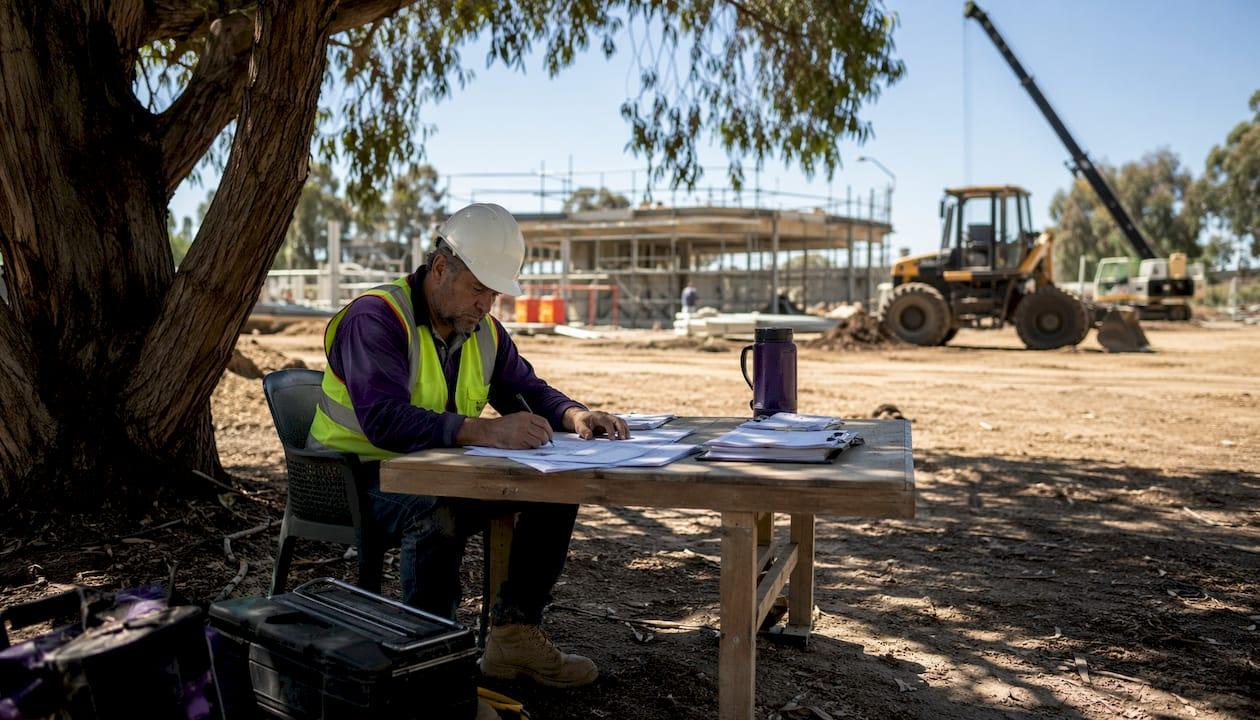
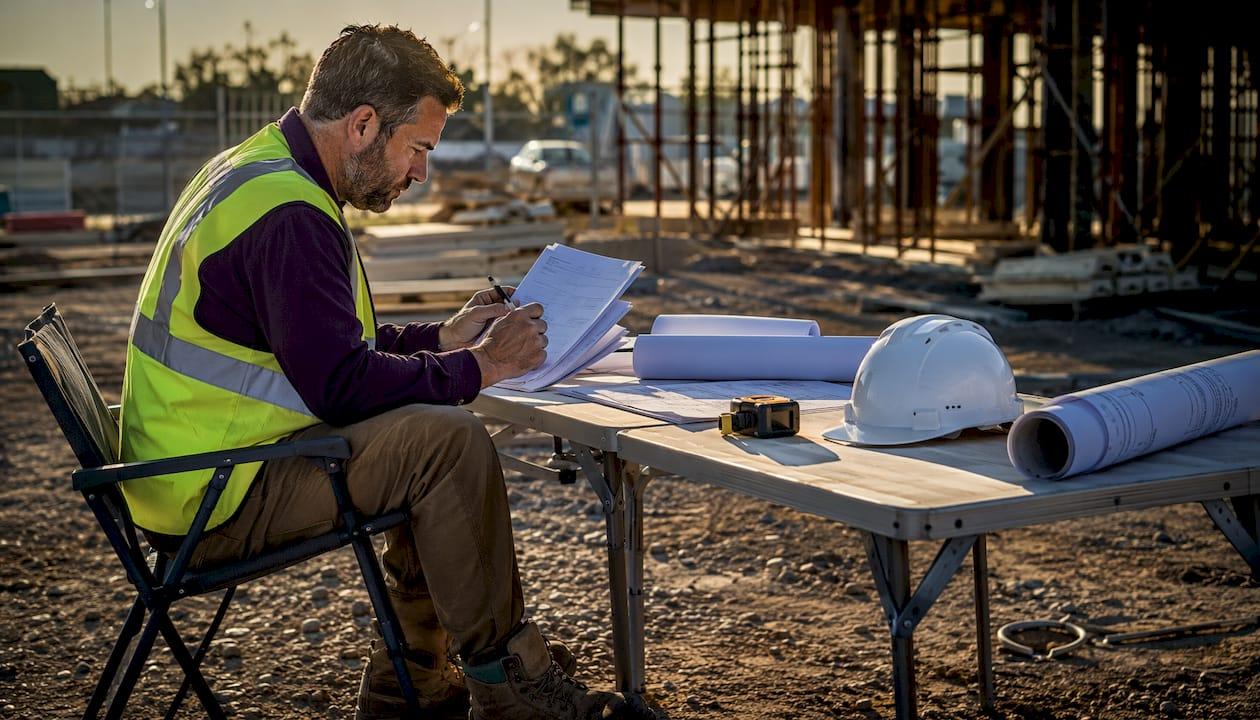
A Safe Work Method Statement (SWMS) is the legally required, job-specific plan for high-risk construction work (HRCW) in Australia. You must prepare a site-specific SWMS before that work begins — not on the morning of, not after the first task is underway.
Here is your immediate action checklist:
- Name the task and site — include the exact workplace address and a clear description of the HRCW activity.
- List hazards step by step — identify each hazard at each stage of the work, not just a general list at the top.
- Apply the hierarchy of control — work from elimination down to PPE; never lead with PPE as the primary measure.
- Assign responsibilities — name the person responsible for ensuring compliance, not just a job title.
- Consult your workers — run a toolbox talk, capture sign-offs, and document who was present.
- Version and date the document — every revision needs a version number, date, and reason for the change.
- Keep copies on site — the SWMS must be available at the workplace for the full duration of the work.
You can download editable SWMS templates directly from Safe Work Australia and state regulators, or use Ask Hayley’s safety and compliance documentation service for professionally prepared, site-ready documents.
Pro Tip: Don’t treat the SWMS as a box-ticking exercise. Regulators look at whether the controls are specific and practical — not whether the form is filled in.
Table of Contents
- When is a SWMS legally required in Australia?
- What must every compliant SWMS include?
- How to prepare a site-specific SWMS step by step
- Ready-to-use SWMS example rows for common HRCW tasks
- When can you use a generic SWMS template?
- Common SWMS mistakes regulators see — and how to fix them
- SWMS versus JSA: which document do you need?
- Record keeping, version control, and what inspectors check
- Putting SWMS into practice with digital workflows
- Key takeaways
- Why site specificity is the only thing that matters in a SWMS
- Ask Hayley helps tradies stay on top of SWMS compliance
- Useful sources for SWMS templates and regulator guidance
When is a SWMS legally required in Australia?
A SWMS is a written document that identifies the HRCW activities at a workplace, the hazards and risks arising from those activities, and the measures to control those risks, including how controls will be monitored and reviewed. The legal trigger is simple: if the work falls under the definition of high-risk construction work, a SWMS must be prepared before that work starts.
Under the Work Health and Safety Regulations (adopted across most Australian states and territories), HRCW triggers a SWMS requirement the moment any of the listed activities are planned. The principal contractor or self-employed person carrying out the work is responsible for ensuring a compliant SWMS exists.
Common HRCW activities that require a SWMS include:
- Working at heights — any risk of a person falling more than a specified height as defined by jurisdiction.
- Excavation work — shafts or trenches deeper than a depth threshold as defined by jurisdiction, or tunnels.
- Demolition of load-bearing structures — including partial demolition affecting structural integrity.
- Work involving asbestos — any activity likely to disturb asbestos-containing materials.
- Confined space entry — work in or near a confined space as defined under the WHS Regulations.
- Energised electrical work — work on or near energised electrical installations or services.
- Tilt-up or precast concrete — erection, tilting, or repositioning of tilt-up or precast elements.
- Work near traffic corridors — work on, in, or adjacent to a road, railway, or shipping lane in use by traffic.
- Pressurised gas or chemical lines — work on or near pressurised gas mains, chemical, fuel, or refrigerant lines.
- Powered mobile plant — work in areas with movement of powered mobile plant.
This is not the complete list. WorkSafe Victoria’s SWMS template and guidance covers all 19 classified HRCW activities, and each state regulator publishes jurisdiction-specific guidance. Always check the regulator for your state or territory.
Regulator note: A single SWMS can cover multiple HRCW activities on one site, or you can prepare separate documents for each activity. If you go the separate route, cross-reference activities that may affect each other — for example, asbestos removal on a roof where workers are also at risk of falling.
What must every compliant SWMS include?
A SWMS that passes a regulator or principal contractor review contains specific, enforceable information — not generic statements. WorkSafe Queensland is clear that vague phrasing like “use appropriate PPE” is inadequate and will not satisfy the legal requirement.
Every compliant SWMS must include:
- Description of the HRCW activity — the specific task, not just “construction work.”
- Site details — full workplace address, project name, and relevant site conditions.
- Hazards and consequences — for each step of the work, what could go wrong and what harm could result.
- Step-by-step work procedure — the logical sequence of tasks, not a summary.
- Control measures following the hierarchy of control — elimination first, then substitution, isolation, engineering controls, administrative controls, and PPE last.
- Roles and responsibilities — the named person responsible for ensuring compliance with the SWMS.
- Monitoring and review plan — how controls will be checked during the work and what triggers a review.
- Dates and version number — when the SWMS was prepared and any revision history.
- Worker sign-on — signatures confirming workers have read and understood the document.
The difference between a SWMS that passes and one that fails often comes down to specificity. Compare these two control measure entries:
| Vague (fails) | Specific (passes) |
|---|---|
| “Use appropriate PPE” | “Wear safety glasses, hard hat, and steel-capped boots at all times on site” |
| “Ensure safe access” | “Install a rated scaffold with guardrails to AS/NZS 1576; inspect daily and record in site diary” |
| “Be aware of electrical hazards” | “Isolate and lock out the circuit at the switchboard before commencing; test with a non-contact voltage tester before touching any conductors” |
Review triggers must also be named in the document. Set a review when: the method of work changes, new plant arrives on site, a near miss or incident occurs, or a worker raises a safety concern during the toolbox talk.
Pro Tip: Reference the relevant Australian Standard (e.g. AS/NZS 1576 for scaffolding, AS/NZS 3000 for electrical) in your control measures. Regulators and principal contractors look for this level of specificity — it shows the control is grounded in a recognised standard, not just common sense.
How to prepare a site-specific SWMS step by step
Generic templates save time, but they need real work to become compliant. Here is a practical workflow you can follow on any HRCW job.
- Select a template — start from a regulator-approved template (SafeWork NSW, WorkSafe Victoria, or NT WorkSafe all publish free versions) or an editable library template. Experienced practitioners keep a master SWMS library of commonly performed HRCW activities and edit per site.
- Scope the job and site — fill in the exact workplace address, project name, and tick the relevant HRCW categories. Walk the site before you write.
- Break the work into steps — list every task in the order it will be performed. Each step becomes a row in your SWMS table.
- Identify hazards per step — for each step, ask: what could injure someone here? Consider people, plant, environment, and adjacent activities.
- Apply the hierarchy of control — for each hazard, work down from elimination. Document why you stopped at a particular level if full elimination is not practicable.
- Write specific control measures — name the standard, the equipment, the inspection frequency, and the responsible person. Avoid any sentence that could apply to any site.
- Consult your workers — run a toolbox talk before work starts. This is not optional. WorkSafe Queensland emphasises that the consultation process is as important as the document itself.
- Capture sign-offs — collect dated signatures from every worker who will perform or supervise the HRCW. A sign-on sheet attached to the SWMS is standard practice.
- Finalise, distribute, and store — keep a copy on site for the duration of the work. Give a copy to the principal contractor if required.
Quality checks before work starts:
- Site address matches the actual workplace.
- Every HRCW category relevant to this job is ticked.
- Control measures reference specific standards or equipment, not generic actions.
- A named responsible person is listed.
- All workers have signed and the date is recorded.
- Plant details (type, serial number, licence requirements) are included where relevant.
Pro Tip: If you use a free trade productivity tool or template library like QuoteLock’s free tools to speed up document prep, always review every pre-filled field against your actual site conditions before signing off.
Ready-to-use SWMS example rows for common HRCW tasks
The table below shows example rows for five common HRCW activities. Copy the structure into your own SWMS template and edit every field to match your site, plant, and personnel.
| HRCW activity | Job step | Hazard | Consequence | Control measures | Responsible person | Review trigger |
|---|---|---|---|---|---|---|
| Working at heights (>2m) | Install roof battens | Fall from roof edge | Fracture, fatal injury | Install perimeter guardrail to AS/NZS 4994.1; use fall-arrest harness anchored to rated point; daily guardrail inspection recorded in site diary | Site supervisor | Change in roof pitch or new plant on site |
| Excavation (>1.5m trench) | Excavate footing trench | Trench collapse, struck by excavator bucket | Crush injury, burial | Batter or shore trench walls per AS 4744.1; exclusion zone 1.5× trench depth; spotter present during machine operation | Excavation supervisor | Change in soil conditions or rainfall event |
| Demolition of load-bearing wall | Remove internal load-bearing wall | Structural collapse, falling debris | Crush injury, head trauma | Structural engineer sign-off before work; temporary props installed per engineer’s specification; exclusion zone established; hard hats and safety glasses mandatory | Licensed demolisher | Any change to prop placement or structural scope |
| Confined space entry | Inspect underground stormwater pit | Oxygen deficiency, toxic gas | Asphyxiation, death | Atmospheric test with calibrated gas monitor before entry; continuous forced ventilation during work; standby person at entry point; rescue plan documented and communicated | Confined space supervisor | Any change in atmospheric readings or work duration |
| Energised electrical work | Replace switchboard components | Electric shock, arc flash | Electrocution, burns | Isolate and lock out circuit; test dead with non-contact voltage tester; use AS/NZS 3000-compliant insulated tools; arc flash PPE (minimum 4 cal/cm² rating) | Licensed electrician | Any change in scope or discovery of unlabelled conductors |
A few fields to customise for every site:
- Replace “Site supervisor” with the actual named person and their licence number where applicable.
- Add the plant make, model, and serial number in the job step column for any plant-related activity.
- Adjust the consequence severity to match your site’s risk rating matrix.
- Add a “Date prepared” and “Version” row at the top of your SWMS document.
Pro Tip: Completed SWMS examples — including electrical installation examples with risk rating matrices and revision logs — are available from OH Consultant’s SWMS example page. Use them as a reference for formatting and specificity, then build your own.
When can you use a generic SWMS template?
A generic template is a starting point, not a finished document. Regulators are consistent on this: generic SWMS that are not customised to site conditions will be rejected, and work may be stopped until a compliant version is produced.
You can use a generic template when:
- You treat it as a draft, not a final document.
- You walk the site before editing and update every site-specific field.
- You review it with the workers who will actually perform the task.
Fields you must customise on every job:
- Site address and project name — never leave a placeholder or a previous job’s address.
- Specific hazards — generic templates list common hazards; you must add or remove based on actual site conditions.
- Control measures — tie each control to your site’s actual equipment, layout, and conditions.
- Named responsible person — a job title is not enough; name the individual and their licence or ticket number.
- Plant and equipment details — make, model, serial number, and inspection status.
- Worker sign-on — the names and signatures of the people doing this specific job.
Quick validation checklist before work starts:
- [ ] Site address is correct and current.
- [ ] All pre-filled hazards have been reviewed and irrelevant ones removed.
- [ ] Control measures reference this site’s actual conditions and equipment.
- [ ] A named, responsible person is listed with contact details.
- [ ] Workers have signed and dated the document.
Pro Tip: If you are working for a principal contractor, check whether they have a preferred SWMS format. Many large builders require their own template — submitting a generic form may delay your start date even if the content is technically compliant.
Common SWMS mistakes regulators see — and how to fix them
Most SWMS failures come down to the same handful of problems. Here is what regulators and principal contractors flag most often, and the quick fix for each.
- Generic language in control measures — “use PPE” or “work safely” tells an inspector nothing. Fix: replace every vague control with a named standard, piece of equipment, or procedure (see the table in the mandatory elements section above).
- Missing site details — a SWMS with no site address or a previous job’s address is non-compliant on its face. Fix: make the site address the first field you fill in, every time.
- No evidence of worker consultation — a document signed only by the supervisor does not demonstrate consultation. Fix: run a toolbox talk, record who attended, and collect dated signatures from every worker before the task starts.
- Unsigned or undated sign-on sheets — signatures without dates are nearly useless in an audit. Fix: use a sign-on sheet with a date column and check it before work begins.
- No version control — a SWMS with no version number or revision history makes it impossible to show what was in place at the time of an incident. Fix: add a version number, revision date, and a one-line reason for each revision to every document.
- No review log — if conditions change and the SWMS is not updated, the document no longer reflects the actual work. Fix: name the review triggers in the document and act on them.
Regulator warning: WorkSafe Queensland and other state regulators can stop work immediately when HRCW is being carried out without a suitable SWMS. Enforcement action can follow, including improvement notices and fines.
The fastest way to fix a weak SWMS on site is to run a five-minute toolbox talk, update the control measures with specific language, collect fresh signatures, and note the revision. That is a compliant document.
SWMS versus JSA: which document do you need?
These two documents serve different purposes, and using the wrong one for HRCW is a compliance gap.
A SWMS is a legal requirement for high-risk construction work. It is task-specific and site-specific, and it must follow the structure set out in the WHS Regulations. WorkSafe Victoria is clear that a JSA is a general risk assessment tool — it does not satisfy the legal requirement for HRCW.
A Job Safety Analysis (JSA) is a broader risk assessment used across general work tasks. It identifies hazards and controls but does not carry the same legal weight as a SWMS for HRCW activities.
When to use each:
- Roof installation on a residential build (fall risk >2m) → SWMS required.
- Routine cleaning of site equipment at ground level → JSA appropriate.
- Excavating a trench 2 metres deep → SWMS required.
- Unloading a delivery truck in a controlled yard → JSA appropriate.
- Entering a confined space for inspection → SWMS required.
A few practical points on using both documents together:
- A JSA can feed into a SWMS — use it to identify hazards during the planning stage, then formalise those findings in the SWMS before HRCW begins.
- On multi-contractor sites, both documents may be in use simultaneously. Keep them clearly labelled and stored separately.
- If a task starts as general work and escalates into HRCW (for example, a trench that reaches 1.5 metres depth), stop and prepare a SWMS before continuing.
- Store both documents on site and make them accessible to workers and inspectors for the duration of the project.
Record keeping, version control, and what inspectors check
Good record keeping is not just about compliance — it is your evidence of due diligence if something goes wrong. The WorkSafe Victoria SWMS guidance requires that older versions be kept as a legal record of the approach at the time the work was performed.
| Record keeping requirement | What to do |
|---|---|
| Version numbering | Assign a version number (e.g. v1.0, v1.1) to every SWMS and every revision |
| Revision date and reason | Record the date of each revision and a brief reason (e.g. “New excavator delivered — exclusion zone updated”) |
| Superseded versions | Keep all previous versions; do not delete or overwrite |
| Notifiable incident retention | If a notifiable incident occurs, retain the SWMS for at least 2 years from the date of the incident |
| On-site availability | The current version must be accessible at the workplace for the full duration of the HRCW |
| Worker sign-on records | Keep dated sign-on sheets attached to or filed with the relevant SWMS version |
| Toolbox talk records | Record the date, attendees, and topics covered; attach to the SWMS file |
Review triggers to document in every SWMS:
- A change in the method of work or sequence of tasks.
- New plant or equipment arriving on site.
- A near miss or incident, even if no injury occurred.
- A worker raising a safety concern during a toolbox talk.
- A scheduled periodic review (set the interval in the document).
Inspectors will look for dated signatures, accessible copies (paper or digital), evidence of toolbox talks, and a clear revision history. A SafetyCulture SWMS implementation checklist is a useful reference for structuring your on-site records.
Putting SWMS into practice with digital workflows
Paper-based SWMS management works, but it creates real admin pressure on busy sites. A simple digital workflow reduces that pressure without adding complexity.
Here is a practical approach that works for most trade businesses:
- On arrival at site — capture job details by voice or typed note: site address, HRCW activities planned, plant on site, and any changed conditions since the last visit.
- Populate the SWMS template — open your master template, update the site-specific fields, and adjust control measures to reflect what you found on arrival.
- Run the toolbox talk — review the SWMS with your crew, answer questions, and collect dated signatures on a sign-on sheet.
- Store the version in the cloud and on a site device — a cloud copy protects against lost paperwork; a local copy on a tablet or phone means workers can access it without internet.
- Capture revision evidence — when conditions change, photograph the change (new plant, changed ground conditions, altered access), note the plant serial number, and attach the photo to the revision entry.
Consider a scenario where a supervisor arrives on site and finds that a new excavator has been delivered overnight, changing the exclusion zone requirements. They photograph the machine’s serial plate, update the SWMS exclusion zone control measure, note the revision reason, and collect fresh signatures before the crew starts. That photo and revision entry become the audit trail if the exclusion zone is ever questioned.
Pro Tip: Capture these five data points every time you revise a SWMS: site address, plant make and serial number, name of the person responsible, reason for the revision, and the date. Those five fields are what an inspector will look for first.
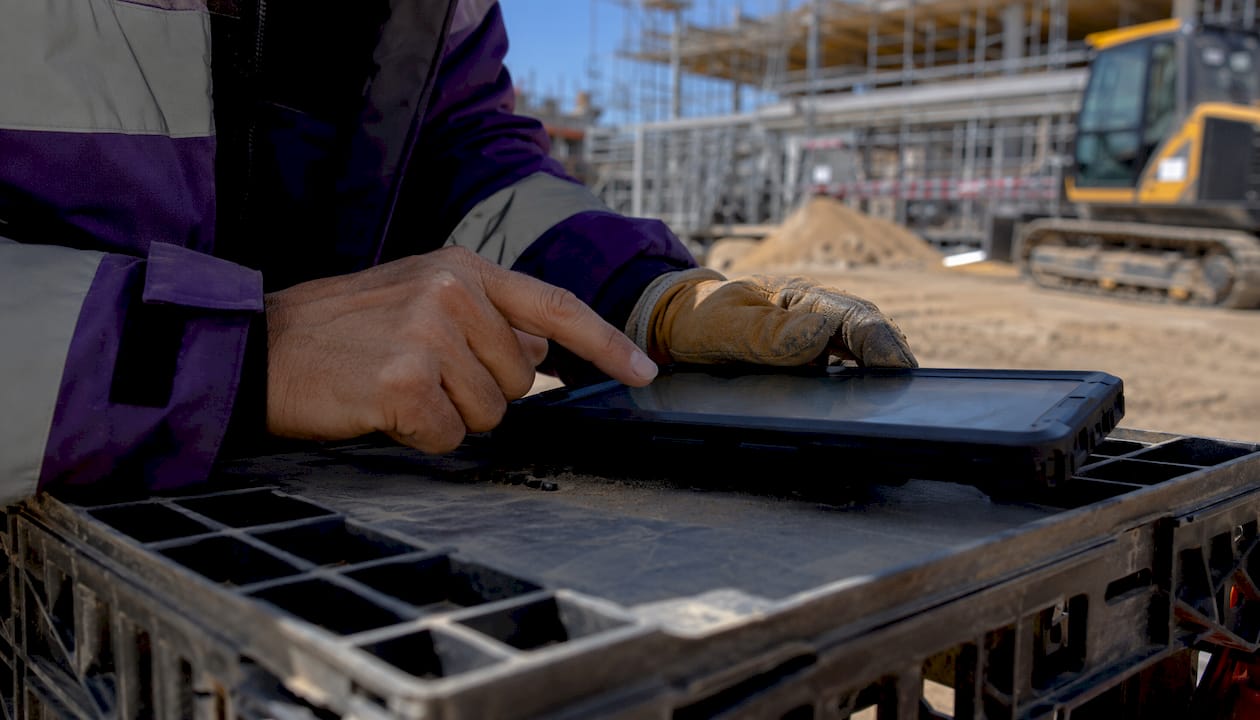
Ask Hayley’s voice-first platform lets you capture job details and compliance notes hands-free on site, feeding directly into your documentation workflow without sitting at a screen.
Key takeaways
A compliant SWMS requires site-specific hazard identification, controls grounded in the hierarchy of control, named responsibilities, documented worker consultation, and a clear version history — prepared before any HRCW begins.
| Point | Details |
|---|---|
| Legal trigger | A SWMS must be prepared before any high-risk construction work begins — no exceptions. |
| Specificity wins audits | Vague controls like “use PPE” fail; name the standard, equipment, and inspection frequency. |
| Consultation is mandatory | Workers must be consulted and sign on before HRCW starts; a supervisor-only signature is not enough. |
| Version every revision | Record the version number, date, and reason for every change; keep superseded copies on file. |
| Ask Hayley supports compliance | Ask Hayley’s safety and compliance documentation service provides editable SWMS templates and voice-capture tools to reduce on-site admin. |
Why site specificity is the only thing that matters in a SWMS
Most SWMS failures I see come from the same misunderstanding: tradies treat the document as a form to complete rather than a plan to follow. The form gets filled in, the boxes get ticked, and then the document sits in a folder while the actual work happens differently on the ground.
The regulators are not wrong to reject generic SWMS. A document that could apply to any site, any crew, and any week is not a plan — it is a template. The whole point of a SWMS is that it reflects this job, this site, these workers, and these specific risks. When something goes wrong and the SWMS does not match what actually happened, the document becomes evidence against you, not for you.
The hierarchy of control is where most documents also fall short. Too many SWMS jump straight to PPE because it is the easiest control to write down. But PPE is the last line of defence, not the first. If you can eliminate the hazard, do it. If you can engineer it out, do that. Administrative controls and PPE belong at the bottom of the list, not the top.
The consultation requirement is the one that surprises people most. Regulators genuinely care about whether workers were involved in developing the SWMS — not just whether they signed it. A toolbox talk where workers can raise concerns and suggest practical controls produces a better document and a safer site. That is the intent of the law, and it is also just good practice.
Ask Hayley helps tradies stay on top of SWMS compliance
Preparing a compliant SWMS takes time — time most tradies do not have between jobs. Ask Hayley’s safety and compliance documentation service takes that pressure off by providing professionally prepared, editable SWMS templates built to Australian regulator standards.

You get documents that are ready to customise for each site, not generic forms that will be rejected on the first inspection. The voice-first platform means you can capture job details, note site changes, and update your compliance records hands-free while you are on the tools. No extra app to learn, no paperwork pile at the end of the day.
If you are preparing SWMS for tender submissions, Ask Hayley’s tendering support service ensures your safety documentation meets principal contractor expectations before you submit. A well-prepared SWMS is often the difference between winning a job and being knocked out at the prequalification stage.
Ready to get your compliance documentation sorted? See how Ask Hayley works and book a free discovery call to find out how the platform fits your trade business.
Useful sources for SWMS templates and regulator guidance
These are the primary sources you should consult when preparing a SWMS or checking compliance requirements for your state or territory.
- SafeWork NSW — Prepare a safe work method statement — includes a SWMS template, completed examples for demolition and general HRCW, and links to the Construction Work Code of Practice. The most practical starting point for NSW tradies.
- WorkSafe Victoria — SWMS template and guidance — fillable online template with sample text, plus detailed guidance on all 19 HRCW activities and who has SWMS duties. Download the PDF or complete it online.
- WorkSafe Victoria — SWMS guidance document (PDF) — the detailed guidance document covering review triggers, versioning requirements, and record-keeping obligations.
- WorkSafe Queensland — Safe work method statements — Queensland-specific guidance on mandatory elements, consultation requirements, and enforcement approach.
- NT WorkSafe — SWMS template — template aligned with the Work Health and Safety (National Uniform Legislation) Regulations 2011; useful for Northern Territory projects.
- SafeWork SA — SWMS for high-risk construction work — South Australia-specific guidance and template resources.
- WorkSafe ACT — SWMS template (PDF) — includes the notifiable incident retention requirement (2 years) and on-site availability obligations.
Always follow the guidance published by the regulator for your state or territory. Requirements are consistent across most jurisdictions under the model WHS laws, but check for any jurisdiction-specific variations — particularly around the fall-height threshold (2 metres in most states, 3 metres in some) and any local codes of practice that apply to your trade.