


An environmental management plan (EMP) is a short working document that says how your job will avoid harming the land, water, air and neighbours around it, who is responsible, and what you will do if something goes wrong. For a tradie, the plan matters most when a council, a principal contractor or a government agency asks for it before you can start. Get it right once, keep it tight, and you can reuse the structure on every job. Get it wrong and you risk a delayed start, a failed tender or a pollution incident with your name on it.
This guide is for trade and small service businesses: what the plan has to cover, when it is required in Australia, how to build one step by step and how to keep it alive on site.
TL;DR
- An EMP (also called a site environmental plan, or a CEMP when it covers the construction phase) explains how you will manage environmental risks, who is responsible and how you will record and report problems.
- When you need one depends on the state, the council, the client and the consent conditions, not on your trade alone. Water, vegetation, contamination, waste soil and dust are the common triggers.
- A good plan is specific and measurable: a site plan, named controls, a responsible person with authority to stop work, an incident procedure and a review schedule.
- It must be accessible on site, updated when the work changes, and approved before work starts where the consent or client requires it.
- NSW changed several environmental laws in 2025, so check the current rules before reusing an old template.
Table of Contents
- What an environmental management plan actually is
- When your job needs one
- What goes in a site environmental plan
- How to write one, step by step
- Putting the plan to work on site
- What has changed recently
- Where we can help
- Our view
- FAQ
- Sources
What an environmental management plan actually is
The NSW Department of Industry’s guideline defines an EMP as a document developed to ensure effective environmental management of a project and that the conditions of consent, related legislation and approval commitments are met. It uses the term for an overarching plan and also for any sub-plan that a consent condition calls for.
You will see a few names for much the same thing:
- EMP: the general term.
- CEMP (construction environmental management plan): the South Australian EPA describes it as a document that sets out how construction-phase activities will be managed to avoid or reduce environmental or nuisance impacts, and how those requirements will be put into practice.
- Site environmental plan: the everyday phrase many tradies and principal contractors use for a site-specific EMP.
- OEMP (operational environmental management plan): covers the building or facility once it is running. Some consents ask for one separately from the construction plan.
The point is the same in every version. It is not a policy statement on a wall. It is a job-specific plan that someone can pick up, follow and be checked against.
When your job needs one
There is no single national rule that says every trade job needs an EMP. Requirements come from the state regulator, the local council, the development consent and the client. That is why two electricians on two jobs can have very different paperwork.
The usual triggers
The SA EPA says a CEMP should be prepared when there is a risk that construction could cause environmental harm or nuisance. Its examples include working in a water-sensitive catchment, near surface or underground waters, near a sensitive receiver such as a home or school, on a site with possible contamination, or moving waste soil and construction and demolition waste.
How it varies by state and client
- NSW government work: the state’s construction guidelines require service providers to prepare and implement a site-specific environmental management plan before relevant work starts and submit it to the agency for review. Agencies may also ask for a certified environmental management system where the risk is high.
- NSW private and council-approved work: the NSW EPA notes that councils will sometimes add a CEMP requirement to development consent conditions, and that it should cover wastes, noise, emissions to air and other impacts.
- Victoria: Melton City Council’s 2025 document sets out triggers such as removing native vegetation or trees, working near waterways, or a risk of dust, erosion or water pollution. The plan must be approved by council before works begin, and an abridged version is allowed for minor internal works.
- Queensland: the University of Queensland’s design standard says a CEMP is required for construction with the potential to cause environmental harm, may not be needed for minor fit-outs and low-risk works, and must be approved before work starts. General environmental duties still apply on the low-risk jobs.
- ACT: the territory’s guidelines ask for an EMP that is specific, well defined and measurable, with performance criteria drawn from legislation, codes of practice or guidelines.
A practical rule: read the consent conditions, the head contract and the tender documents first. If any of them mention a CEMP, an EMP or an environmental management system, you need to deliver one. If you are not sure, ask the principal contractor or the council before you price the job, not after.
A real example shows how binding this can be. A NSW development consent approved in August 2025 prohibits starting construction until the CEMP is approved. The same consent wants the CEMP to incorporate sub-plans for traffic, erosion and sediment control, dewatering, air quality, noise and unexpected finds. On a large site, your scope may sit inside that bigger plan, and your own plan has to match it.
What goes in a site environmental plan
You do not need fifty pages. You need the right headings, filled in with detail from your actual job. Pulling together the SA EPA guide and the ACT guidelines, a sound plan covers the following.
1. Site and surroundings
Give the address, the nature of the site and what is around it: waterways, stormwater drains, bushland, neighbouring homes, schools, heritage items. The SA EPA calls these sensitive receivers, meaning the people or places that could be affected by your work.
2. Description of the works
Say what you are doing, in what order, over what timeframe, and during which hours. A roofer stripping old sheeting, a concretor washing out trucks and an arborist chipping on a steep block each create different risks, so describe the real job.
3. Risks and controls
List each environmental risk, the control you will use, and the risk left over once the control is in place. The NSW guidelines tell contractors to consider impacts on air, water or land, including waste, emissions, resource use, flora, fauna and indigenous and cultural heritage. They also prompt specific questions: where does wastewater go, how much water do you use, how is waste handled?
Typical trade examples:
| Trade | Common risk | Typical control to plan for |
|---|---|---|
| Concretors | Cement slurry reaching drains | Washout area, bunding, no washing into stormwater |
| Painters | Paint and rinse water entering drains | Contained wash station, waste collection |
| Roofers | Dust, fibres and offcuts blowing offsite | Enclosed skips, wetting, daily clean-up |
| Arborists | Mulch and fuel spills, vegetation protection | Spill kit, protected zones, designated chipper position |
| Plumbers and irrigation | Dewatering, trench spoil, wastewater | Sediment control, approved discharge point |
| Builders and carpenters | Sediment, noise, waste | Erosion controls, work hours, waste segregation |
These are examples of how to think about it. Your actual controls must match your site and your approvals.
4. A site plan
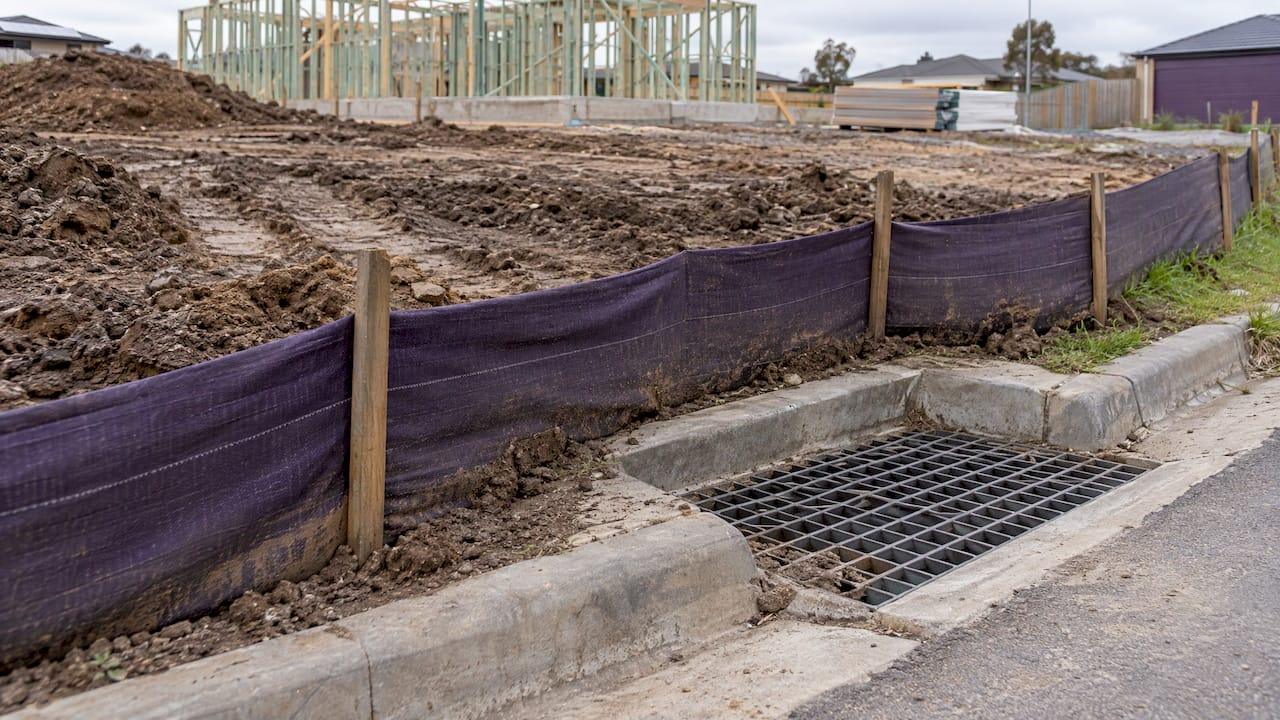
The ACT guidelines ask for dimensioned plans showing stockpile, waste and fuel storage areas, waterways, erosion and sediment controls, access points, traffic movement and monitoring locations. Even where nobody demands that level of detail, a marked-up site sketch makes the plan far easier to follow and to audit.
5. A named responsible person
The SA EPA guide says the plan should identify a responsible person with authority to stop works and to notify the EPA of serious harm. On a small crew, that is usually the owner or the site lead. Put a name and a mobile number in the plan.
6. Monitoring, reporting and contingencies
Say what you will check, how often, who records it and where the records live. Add what you will do if a control fails, such as a spill, a sediment-laden runoff event or an unexpected find. The SA guide also expects a communications plan and a complaint register, so neighbours know who to call.
7. Legal framework
Name the laws and approvals that apply to the job. Queensland’s standard, for example, lists the Land Regulation 2020, the Biosecurity Act 2014, the Waste Reduction and Recycling Act 2011 and the Commonwealth Environment Protection and Biodiversity Conservation Act 1999 among the legislation a CEMP must identify. Your list will depend on your state and the site.
How to write one, step by step
- Collect the paperwork. Gather the consent conditions, the head contract, the site plans and any environmental reports. These decide what the plan must say.
- Walk the site. Note waterways, drains, trees, neighbours, slopes, existing contamination and where deliveries and waste will go. Photograph it.
- List the activities and their impacts. For every task, ask what could reach air, water or land, and who might be affected.
- Choose a control for each risk. Make it something your crew can actually do, with a trigger and an owner. Vague promises like ‘minimise dust’ will not satisfy a reviewer. The ACT guidelines want criteria that are measurable and shown to be achievable.
- Assign responsibility. Name the person who can stop work, the person who inspects and the person who records.
- Write the incident procedure. Who is told, how fast, and what gets recorded. See the next section for real timeframes.
- Set the review schedule. Decide when the plan is reviewed and what changes force an update.
- Submit for approval where required. Do not start until it is approved if the consent, council or client says so.
If your plan is part of a tender, it also needs to read well. Reviewers score clarity, so keep the language plain and the layout consistent. Our guide to scoring tender methodology statements covers how to present your approach to a reviewer.
Putting the plan to work on site
A plan that sits in the ute’s glovebox does not protect anyone. Larger clients show what good practice looks like.
Keep it accessible and current
Seqwater’s contractor procedure requires the plan to be accessible on site at all times, with an electronic copy to the Superintendent. It must be revised when work processes or site conditions change or monitoring shows a need. Implementation is verified through checks, field records, inspection checklists and audits.
The tracking mindset applies beyond sediment and spills. Pest control on a commercial site, for instance, depends on regular inspection and adjusting the approach as conditions change, as this explanation of integrated pest management in practice shows. Your environmental controls work the same way: check, record, adjust.
Know your incident timeframes
Timeframes come from your consent and your state law, so read them. Two examples:
- Seqwater requires contractors to notify the engaging officer as soon as practicable, preserve the scene, and provide an investigation report and corrective actions within five business days.
- A NSW industrial estate CEMP shows consent-driven notification to the department within 24 hours, a detailed report within 30 days, and incident records kept for at least five years.
If an incident has caused or threatens material harm to the environment, contact the relevant state environment authority straight away. The EPA in your state is the right place for that call.
Review on a schedule
The UQ standard requires reviewing the CEMP at least every 12 months and after changes to scope, design, methodology, legislation, a compliance incident or policy. Treat that as a sensible default for any plan.
What has changed recently
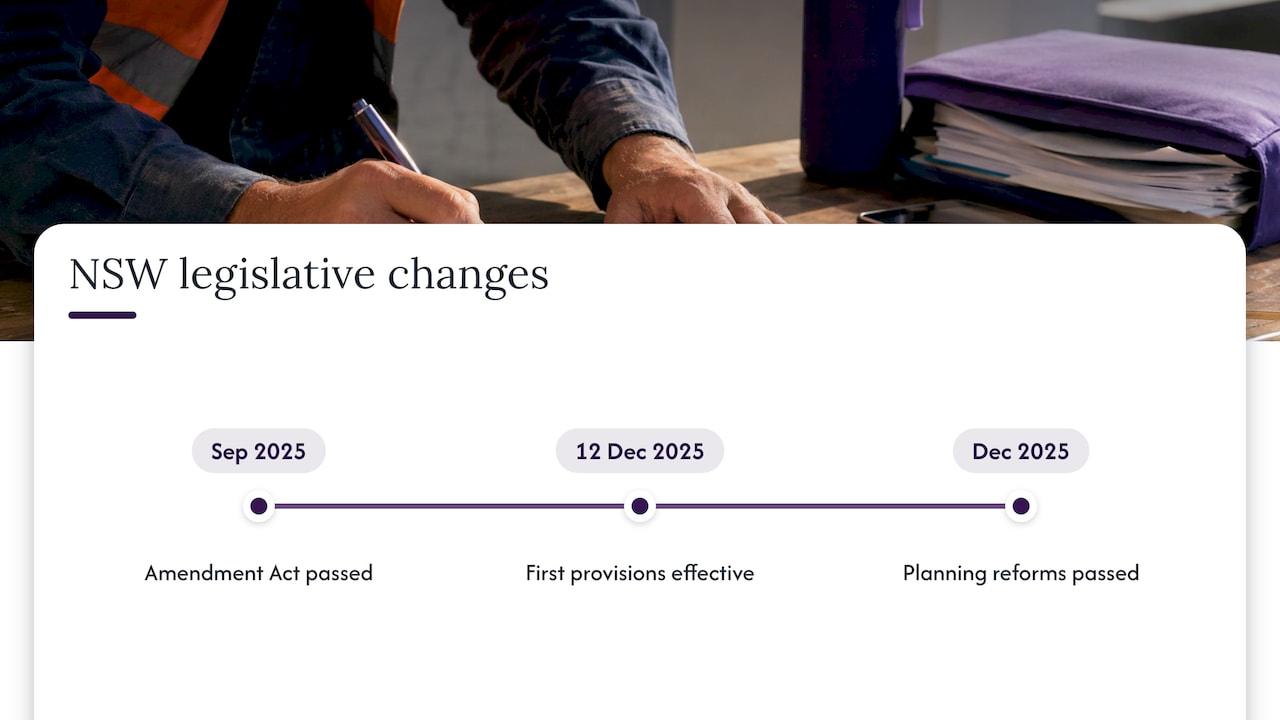
NSW tightened its framework in 2025. A law firm’s year-in-review reports that the Environmental Legislation Amendment Act 2025, passed in September 2025, covers increased transparency for environmental management plans, a higher financial trigger for the duty to notify pollution incidents and stronger penalties, with the first provisions in effect from 12 December 2025 and further proclamations pending. The same review notes the Planning System Reforms Act passed in December 2025, which focuses consent authorities on significant environmental impacts.
What this means for you: do not recycle a 2020 plan without checking it. Confirm your state’s current rules, and the conditions on the specific job, before you submit anything.
Where we can help
Most tradies know their trade and hate the paperwork. The plan is not hard, but it has to be accurate, consistent and ready when a tender closes or a principal contractor asks. We offer safety and compliance documentation for Australian trade businesses, alongside tendering support and a voice-first platform where you manage your business by talking instead of typing. You can see the safety and compliance documentation service or start from the Ask Hayley home page.

If prequalification is what is holding up your next contract, our guide to contractor prequalification explains what principals look for. And if a safety certification is the next step, see how to get CM3 compliant.
Our view
Environmental paperwork is where good tradies lose jobs they should win. The work is solid, the crew is careful, but the plan is thin, late or written in a language the reviewer does not trust.
We built Ask Hayley around the reality of trade work: hands full, on site, no time at a screen. Our platform lets you manage your business by voice, and it covers compliance tracking, task management and reporting, so the records a plan relies on do not depend on a Sunday night at the laptop.
Our view is simple. Treat the environmental plan as part of how you win work, not a hurdle after you have won it. A clear plan with a named person, real controls and a review date tells a client you run a tight business. We offer safety and compliance documentation so tradies can present that professionally from the first tender.
Hayley
FAQ
What is the difference between an EMP and a CEMP?
An EMP is the general term for a plan that manages a project’s environmental impacts. A CEMP is the construction-phase version, describing how construction activities will be managed to avoid or reduce harm and nuisance. Many people call a site-specific one a site environmental plan.
Does every small job need an environmental management plan?
Not necessarily. Requirements depend on your state, council, client and consent conditions. Queensland’s UQ standard, for example, says minor fit-outs and low-risk works may not need a CEMP, though general environmental duties still apply. Check your contract and consent before you start.
What should an environmental plan include?
At minimum: the site and its surroundings, a description of the works, the risks with their controls, a site plan, a named responsible person with authority to stop work, monitoring and reporting, incident and complaint procedures, and a review schedule. The SA EPA guide and ACT guidelines linked above set out the detail.
Who approves the plan?
That depends on the job. It may be the council, a state planning authority, a government agency or the principal contractor. Melton City Council, for example, requires approval before any works commence. Your consent conditions will say who signs off.
Sources
- NSW Department of Industry: EMP Guideline for Infrastructure Projects
- SA EPA: Construction environmental management plan (CEMP)
- NSW Government: Environmental management guidelines for construction
- NSW EPA: Construction sites guidance note
- Melton City Council: Planning for the Environment
- University of Queensland: Environmental Design Standard DS-16
- ACT Government: Environmental guidelines for preparation of an Environmental Management Plan
- NSW Development Consent SSD-23480429
- Seqwater: Contractor Management Procedure
- Oakdale West Industrial Estate CEMP
- Ashurst: Australian Environment & Planning Year in Review 2025


