


Queensland and Victoria cap residential building deposits at 10% under $20,000 and 5% above that, while WA limits them to 6.5% for contracts between $7,500 and $500,000. Always put your terms in writing and check your state regulator before you quote.
TL;DR:
- Skip deposits for short repairs with no material costs; collect payment at completion, or keep a card on file for simple callouts.
- For jobs with moderate material costs, request 10% to 20%; larger projects may need 30% to 50%, often staged around material orders.
- Once work begins, tie progress payments to completed work or supplied materials; do not bill for future stages or costs not yet incurred.
- In Victoria, provide the required domestic building insurance certificate before collecting a deposit for larger residential work, and confirm coverage matches the contract.
- State the deposit percentage and dollar amount, payment date, cancellation terms, and terms for ordered materials in writing; keep both invoices for five years.
Table of Contents
- Typical deposit amounts and when to ask for them
- State and territory rules you must know
- Deposits versus progress payments: lawful practice and scheduling
- Practical deposit clauses, invoicing and recordkeeping tradies should use
- Templates and automation: how to operationalise deposit terms
- Why a consistent deposit policy matters for your trade business
- Ask Hayley: quick ways to add deposit terms and reminders to your workflow
- FAQ
- Sources
Typical deposit amounts and when to ask for them
The right deposit depends entirely on what you’re walking into. A quick call-out or repair usually doesn’t need one at all: if there’s no material outlay and the job takes an hour, charging on completion or keeping a card on file is simpler for everyone. Once materials enter the picture, a deposit protects you from being left holding stock nobody wants.
A kitchen renovation might see 30% requested to lock in cabinetry and appliances, with the balance split across progress payments and a final payment on completion.
- Spot jobs and repairs: no deposit, or payment on completion.
- Jobs with moderate materials: 10% to 20% is reasonable.
- Larger projects: 30% to 50%, often staged against material orders.
Deposits exist to protect your cashflow and your schedule, not to squeeze the customer. A tradie who’s ordered $8,000 of custom joinery needs that money committed before the supplier invoice lands, and a clear deposit structure makes that normal rather than awkward.
State and territory rules you must know
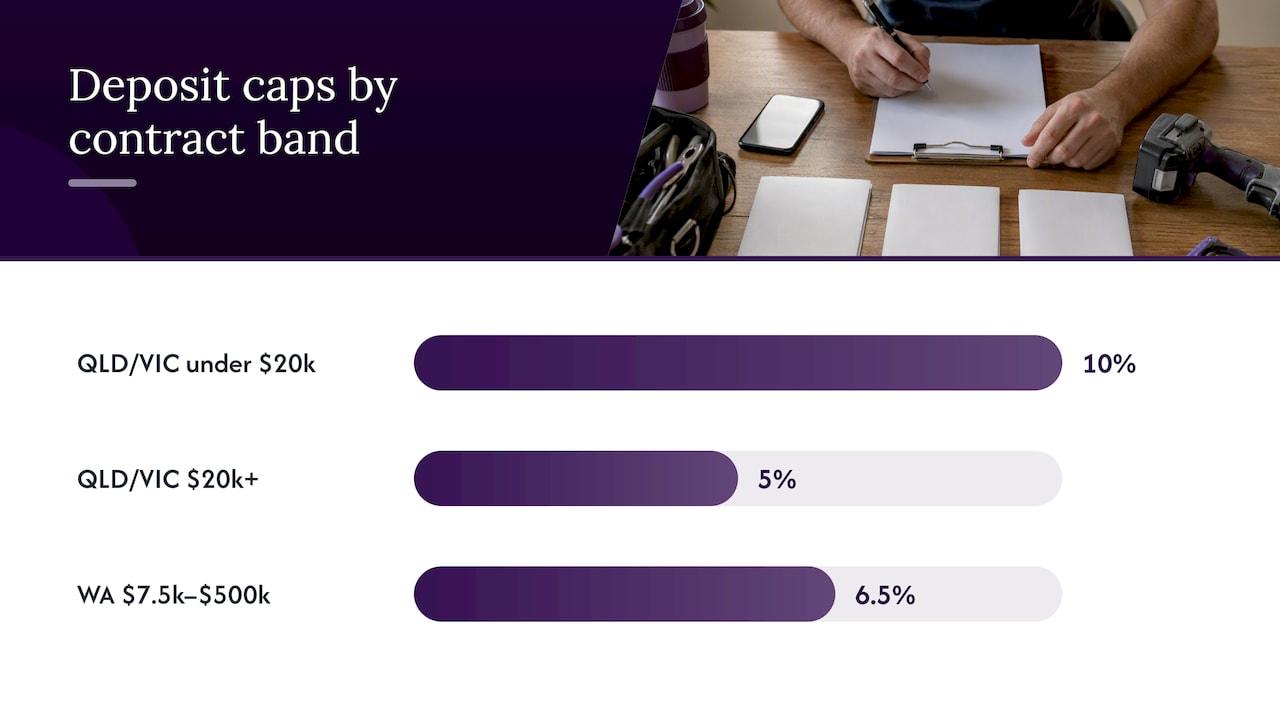
Statutory deposit caps for residential building work differ by state, and getting this wrong can cost you more than the deposit itself. In Queensland and Victoria, the maximum deposit for domestic building contracts is 10% when the contract is under $20,000 and 5% when it’s $20,000 or more, under QBCC guidance and Consumer Affairs Victoria rules. Victoria also requires you to provide a domestic building insurance certificate before taking a deposit on larger work.
Western Australia runs a different band. The WA home building contracts factsheet limits deposits to 6.5% of the contract price for home building work priced between $7,500 and $500,000, with home indemnity insurance requirements sitting alongside that cap.
- QLD and VIC: 10% deposit cap under $20,000, 5% cap at $20,000 or more.
- WA: 6.5% cap for contracts between $7,500 and $500,000.
- Both QLD and WA allow higher deposits, often around 20%, where more than half the work involves off-site prefabrication.
Contracts outside these bands, under $7,500 or over $500,000 in WA, for example, can fall outside the standard caps, so check with your state regulator before assuming a higher percentage is safe. Home indemnity insurance requirements generally kick in alongside these thresholds for residential building work, so confirm your cover lines up with your deposit terms before you take a cent.
Deposits versus progress payments: lawful practice and scheduling
A deposit secures a booking or covers upfront material costs before work starts. A progress payment, by contrast, is payment for work already completed or materials already supplied, and it has to match what’s actually been delivered rather than what’s hoped for. In most jurisdictions, the deposit is the only payment you can lawfully take before any work begins; everything after that needs to track real progress.
A sensible payment schedule usually looks like this:
- Small service job: full payment on completion, no deposit required.
- Medium renovation: deposit to secure materials (commonly 10% to 30%, within your state’s cap), a progress payment at an agreed milestone, and a final payment on completion.
- Large build: a capped deposit, followed by progress payments tied to defined stages such as slab, frame, lock-up and fit-out.
Staging payments this way keeps your cashflow steady without breaching the rules on what counts as a deposit versus what counts as work already done.
Practical deposit clauses, invoicing and recordkeeping tradies should use
Your quote or contract should spell out the deposit percentage, the dollar figure, when it’s payable, your refund and cancellation terms, and a clause covering what happens once materials are ordered. The Australian Consumer Law requires these terms to be clear and fair, so vague wording like “deposit required” without detail leaves you exposed if a dispute arises.
Operationally, keep the deposit on its own invoice rather than folding it into the final bill. Credit it clearly on the final invoice once the job wraps up, and hold onto both documents for at least five years in case a warranty or dispute claim comes up later. This recordkeeping habit, recommended by the QBCC, makes final invoicing simple and gives you a clean paper trail.
- State the deposit as both a percentage and a dollar figure on the quote.
- Include a materials-ordered clause making part of the deposit non-refundable once stock is purchased.
- Offer split or staged deposits for larger jobs to ease the upfront burden on customers.
- Keep deposit and final invoices on file for five years.
Pro Tip: Write your deposit clause once, save it as a quote template, and reuse the same wording every time, consistency removes the awkward back-and-forth over terms.
Trade-business guides recommend exactly this approach: standard wording in every quote, framed as process rather than negotiation, reduces disputes according to hipages’ guidance on asking for deposits.
Templates and automation: how to operationalise deposit terms
Writing the clause is one thing, applying it consistently on every job is another. We built tradie quote terms as a starting template you can adapt to your state’s caps and your own material exposure, alongside a 30-day quote expiry policy that stops quotes sitting open indefinitely while prices move.
- Use a quote template that locks in deposit percentage, expiry date and refund terms together.
- Set automated SMS reminders ahead of start dates to reinforce deposit and booking terms before the job begins.
- Pair a clear cancellation policy with your deposit clause so refund expectations are set before any dispute arises.
Automating these touchpoints through voice-first prompts means the terms you set in your quote actually get enforced on the day, without you having to chase anyone manually.
Why a consistent deposit policy matters for your trade business
Treat your deposit policy as a cashflow tool, not something you renegotiate every time a customer pushes back. The moment you start making exceptions, you lose the leverage that protects your material spend and your schedule. Set a percentage that reflects the job’s complexity and material exposure, state it plainly in every quote, and hold the line. Customers respect clarity far more than they respect flexibility that looks like uncertainty.
— Hayley
Ask Hayley: quick ways to add deposit terms and reminders to your workflow
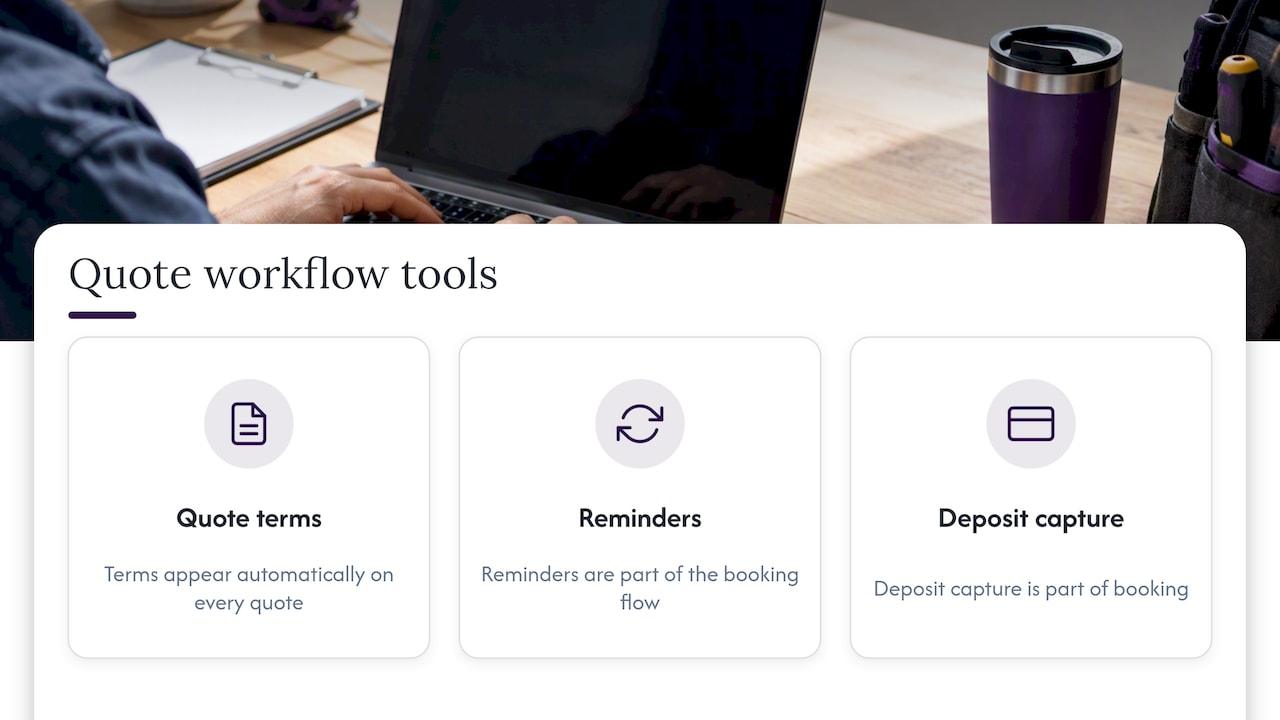
Getting a deposit policy written down is one step; having it show up automatically on every quote is what actually protects your cashflow. Our tradie quote terms and quote expiry policy give you wording to adapt straight away, and our voice-first platform handles reminders and deposit capture as part of the standard booking flow, so the terms you set don’t rely on you remembering to chase them.

If you’re quoting bigger jobs with real material exposure, it’s worth reviewing your job cancellation policy alongside your deposit terms, and if material costs are squeezing your margin, this guide to protecting margin on rising material costs is a useful read before you set your next percentage. Visit Ask Hayley to see how the platform fits around your existing quoting process.
This article is general information, not a substitute for advice from a qualified lawyer. Consult a qualified legal professional about your own circumstances before acting on anything here.
FAQ
What is the maximum deposit a builder can ask for?
In Queensland and Victoria, the maximum is 10% for contracts under $20,000 and 5% for contracts $20,000 or more. In Western Australia, the cap is 6.5% for home building contracts between $7,500 and $500,000, with a higher exception for substantial off-site prefabrication.
Is it normal for trades to ask for deposit?
Yes, asking for a deposit on jobs involving material costs or larger project work is standard practice across the trades. Smaller call-outs or repairs with no material outlay often don’t require one at all, with payment taken on completion instead.
How much can a company legally ask for a deposit?
This depends on the state and the nature of the contract: residential building work in QLD and VIC is capped at 10% or 5% depending on contract value, while WA caps sit at 6.5% for contracts between $7,500 and $500,000. For work outside these specific bands or outside residential building contracts, check the Australian Consumer Law and your state regulator, since different rules can apply.
What happens if I have more than $250,000 in my bank account?
This question relates to bank deposit guarantees rather than trade deposit policy, and it isn’t something our guidance on quoting and contracts covers. For questions about protections on business banking balances, your bank or a financial adviser is the right contact.
Sources
- Deposits and progress payments | Queensland Building and Construction Commission
- Deposits and payments for domestic building — Consumer Affairs Victoria
- Home building contracts — WA building factsheet
- Consumer
- When should you ask for a deposit and how to do it right — hipages business blog


