


A tradie quote must be clear, itemised and state your business name, ABN, scope of work, GST treatment, payment terms and an acceptance method. Once a customer accepts it, that quote can become a binding contract under Australian law. Getting the wording right up front protects your margin, your schedule and your reputation.
TL;DR:
- Deposits for jobs over $1,000 should be non-refundable once materials are ordered, protecting your costs and commitments.
- Clearly state whether prices include or exclude GST to prevent customer confusion and ensure compliance with tax rules.
- Use a quote validity period of 14 to 30 days to avoid customers locking in last year’s prices on upcoming projects.
- Acceptance methods like signatures or deposit payments turn a quote into a binding contract, so document all acceptances and communications.
- Incorporate specific, job-related exclusions and variation procedures to reduce disputes and ensure transparent, enforceable terms.
Table of Contents
- What to include on a tradie quote: a checklist you can use now
- Drafting plain-English terms that comply with the ACL
- Payment, deposits, GST and invoicing rules for tradie quotes
- Timelines, quote expiry and cancellation or reschedule rules
- Acceptance and when a quote becomes a binding contract
- Templates and example clauses to copy and adapt
- How Ask Hayley can operationalise your quote terms
- Why consistent enforcement matters
- Ask Hayley: templates and services for tradies who want to simplify quoting
- Sources
- FAQ
What to include on a tradie quote: a checklist you can use now
Every quote you send should double as a legal document and a sales tool. According to Business, a written quote needs to cover your business details, a clear scope and an itemised breakdown of costs, along with dates and an acceptance method. Miss one of these and you leave room for a dispute later.
Here’s what belongs on every quote you send:
- Business name, ABN and contact details, plus the customer’s name and job address.
- A quote reference number, the issue date and a clear validity or expiry date.
- An itemised scope of work with line-item pricing and GST clearly shown as included or excluded.
- Payment terms, deposit amount, accepted payment methods and due dates for each stage.
- An acceptance method, whether that’s a signature, an email reply or a deposit payment.
- Inclusions and exclusions, the process for handling variations and an expected timeline.
- Cancellation and rescheduling rules, including any trip or call-out charges.
None of this needs to read like a legal contract. Keep the language plain and specific to the job in front of you, not a generic paragraph copied from your last quote. A customer who understands exactly what they’re paying for is far less likely to argue about it once the invoice lands.
Drafting plain-English terms that comply with the ACL
Clear terms protect you better than clever ones. Write your scope and conditions the way you’d explain the job to the customer standing in their kitchen, not the way a lawyer might phrase it for a courtroom. Vague phrases like “may include additional work as required” give you no real protection and can even work against you if a dispute lands in front of a tribunal.
Spell out exclusions specific to the job. If you’re quoting on an older property with brittle pipework or a renovation with unknown wall cavities, say so in writing. That single line can save you an awkward conversation about who pays for an unexpected fix.

Under the Australian Consumer Law, certain terms are considered unfair and won’t hold up regardless of what your quote says. The ACCC’s guidance on consumer guarantees makes clear that services must be delivered with due care and skill, and that these guarantees apply no matter what additional terms a business includes. One-sided cancellation rights and blanket “no refunds, ever” statements both fall into this risky category.
Pro Tip: Add a simple variation clause stating that any extra work outside the original scope needs written approval and a price before it starts.
If you’re changing your standard terms for a large or complex project, it’s worth having them checked locally before you send the next quote.
Payment, deposits, GST and invoicing rules for tradie quotes
Money terms are where most quote disputes start, so spell them out rather than leaving them implied, using clear guidance like Electrician Trade Pricing & Project Support | Vuetek to help structure your pricing and payment terms effectively. A deposit is standard practice for larger jobs or those requiring special-order materials, and stating when that deposit becomes non-refundable protects you once you’ve committed to ordering stock, according to operational guidance on contractor cancellation policies.
On GST, business.gov.au and ATO guidance both recommend showing prices clearly as “includes GST” or “excludes GST” rather than leaving customers to guess.
A few defaults worth locking in:
- Deposits: consider a percentage or flat amount for jobs over $1,000, stated as non-refundable once materials are ordered.
- GST: show it separately, or state clearly that all prices include GST.
- Tax invoices: if a customer asks for one, you must provide it within 28 days under ATO rules.
- Progress claims: for larger jobs, break payments into milestones tied to completed stages rather than one lump sum at the end.
Timelines, quote expiry and cancellation or reschedule rules
A quote without an expiry date is an open invitation for a customer to lock in last year’s material prices on next year’s job. Most trades work well with a 14 to 30 day validity window, shortened when material costs are moving fast. Ask Hayley’s own 30 Day Quote Expiry Policy is built around that same logic: protect the price, protect the slot.
Notice periods should scale with the size of the booking you’re protecting.
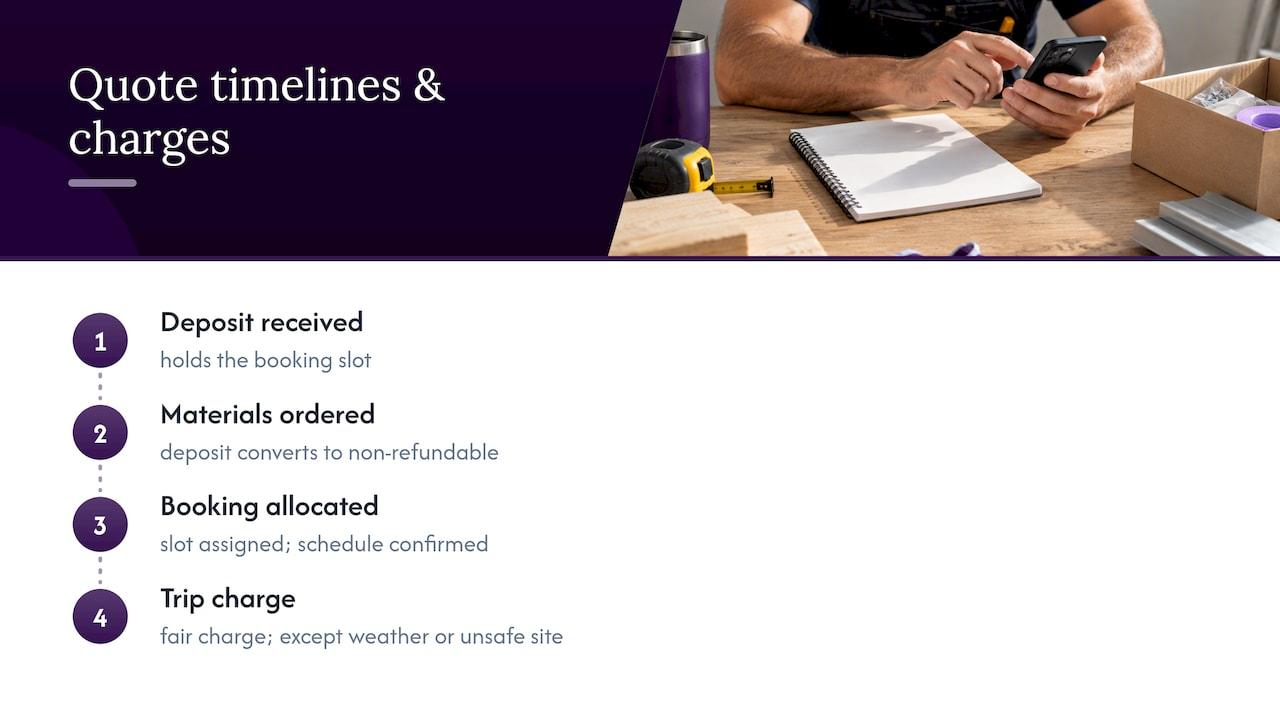
Deposits should convert to non-refundable once materials are ordered, and trip charges are fair once you’ve allocated a slot, with reasonable exceptions for weather or an unsafe site. Ask Hayley’s job cancellation policy template covers this in more detail if you want a starting point.
Acceptance and when a quote becomes a binding contract
A quote turns into a contract the moment the customer accepts it in a way your terms recognise. That could be a signature, a clear written reply saying “yes, go ahead” or payment of the deposit.
To keep things clean and defend your position if a dispute ever comes up, follow this sequence:
- State your accepted acceptance methods clearly on the quote itself.
- Save every email, signed PDF and payment receipt against the job number.
- Take site photos before you start, especially where existing damage or wear could be disputed later.
- Use a short pre-start checklist to confirm the client understands the scope and their obligations.
Where something does go wrong, ACL consumer guarantees still apply regardless of your written terms, so document any remediation offer you make.
Templates and example clauses to copy and adapt
You don’t need a lawyer to draft workable terms, just a solid starting template and the discipline to tailor it to each job. Sprintlaw’s small business template guidance recommends covering scope, inclusions and exclusions, pricing and validity, payment terms, variations, timelines, cancellations, warranties and acceptance.
A few short clauses worth having on hand:
- Scope: “This quote covers [specific tasks] only. Any work outside this scope will be quoted separately.”
- Variation: “Additional work will not proceed without written approval and an agreed price.”
- Deposit: “A deposit of [amount] is required to confirm this booking and becomes non-refundable once materials are ordered.”
- Cancellation: “Cancellations within [notice window] of the scheduled start may incur a call-out fee.”
Adapt these for the job in front of you. Wet trades might add a clause about access to water shutoffs, older properties might flag hidden damage risk, and special-order materials might need a longer lead-time note. Before you send anything, replace every placeholder, set a timeline you can actually meet and confirm your deposit rule matches the job’s size.
How Ask Hayley can operationalise your quote terms
Writing good terms is one thing. Getting them followed every single time, on every job, is another. Voice-captured lead and quote details help templates go out consistently without retyping the same clauses again at 6pm on a job site.
Booking texts and a 30 day quote expiry policy can work together to protect slots and deposits automatically, rather than relying on remembering to chase an expiry date. When acceptance, payments and job records are tied together, it provides a clearer paper trail if a dispute arises.
Why consistent enforcement matters
Good terms only work if your whole team applies them the same way, every time. Train staff with a short script for deposits and cancellations so nobody waives a fee just to avoid an awkward call. Clear quotes build trust before the job even starts, and a quick follow-up call or text after sending one tends to bring the acceptance in faster.
— Hayley
Ask Hayley: templates and services for tradies who want to simplify quoting
Writing solid terms takes time you probably don’t have between jobs. Voice-captured quote templates, booking texts and document control can help make deposit and expiry rules stick without extra admin at the end of a long day.
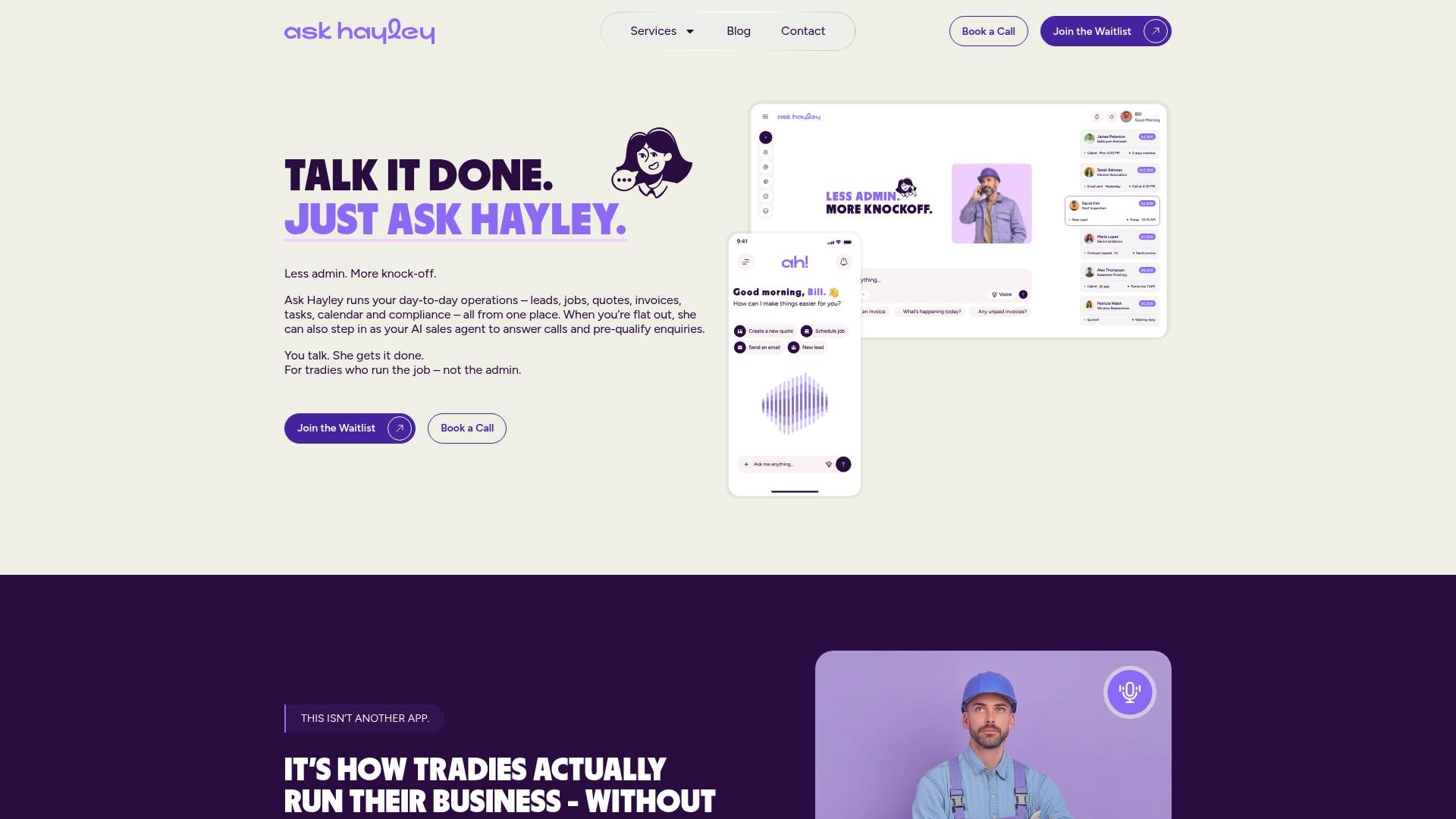
If your quotes need to double as tender documents or compliance packs, Ask Hayley’s tendering and safety and compliance documentation services can help you get there without hiring a consultant. Have a look at what’s on offer at Ask Hayley and get in touch to tailor your own terms.
Sources
- Business
- Consumer guarantees – a guide for businesses and legal practitioners (ACCC)
- Quote terms and conditions template: Australian small business guide | Sprintlaw
This article is general information, not a substitute for advice from a qualified lawyer. Consult a qualified legal professional about your own circumstances before acting on anything here.
FAQ
What are some common slang terms used to describe tradies in Australia?
Tradies are often called by their trade nickname, such as “sparky” for an electrician, “chippy” for a carpenter or “plumbo” for a plumber. These terms are informal and widely understood across Australian trade industries, but they have no bearing on what your written quote needs to include.
What is the legal difference between a quote and an estimate in Australia?
A quote is a fixed price offer that, once accepted, can form a binding contract, while an estimate is a rough, non-binding indication of likely cost that can change once work begins. Because a quote carries more legal weight, it should include the full detail outlined in business.gov.au’s guidance, including scope, pricing and an expiry date.
What are the current terms of trade in Australia?
“Terms of trade” typically refers to broader trading and payment conditions businesses set with suppliers or customers, and specifics vary by industry and agreement rather than following one fixed national standard. For a tradie’s own quote, the relevant terms are the ones you set yourself: payment timing, deposit rules and GST treatment, guided by ATO invoicing rules.
When does a quote become a binding contract?
A quote becomes a binding contract once the customer accepts it through a method your terms recognise, such as a signature, a clear written reply or a deposit payment. Keeping a saved copy of that acceptance, along with payment receipts and job notes, gives you a stronger position if a dispute arises later.


