


Most Australian tradie websites cost somewhere between a few hundred dollars (DIY) and several thousand (professionally built), plus a smaller ongoing bill for the domain, hosting and updates. The build price is only half the story. What matters is the total over three years, who owns the site at the end, and whether it actually brings in calls.
This guide breaks down the price bands, what each one gets you, the ongoing costs people forget, and how to read a quote without getting burned.
TL;DR
- A DIY site costs the least in dollars but the most in your time. A professionally built site costs more up front but saves hours you’d rather spend on the tools.
- Judge any quote by the three-year total, not the build fee. Monthly plans, hosting and “small changes” add up.
- Ask who owns the domain and the site files. If it isn’t you, the cheap price isn’t cheap.
- A .au domain is a small cost, around $20 to $30 a year, so never pay a premium for one.
- For most single-trade businesses, a tight one-page or five-page site beats a sprawling one.
Table of Contents
- What a tradie website costs in Australia
- What you get at each price point
- The ongoing costs people forget
- A worked example: three years, two quotes
- How to judge a quote
- Our perspective: price the site against the jobs it wins
- Our One Page Website option
- Making the site pay for itself
- When to spend more, and when not to
- FAQ
- Sources
What a tradie website costs in Australia
Think of it in four bands. These are rough, general ranges, not a price list. Every provider sets its own, and they move, so treat them as a way to sanity-check a quote rather than a promise.
| Option | Rough build cost | Ongoing cost | Your time | Best for |
|---|---|---|---|---|
| DIY builder (drag-and-drop) | Low: a platform subscription | Monthly or yearly platform fee | High: many hours of setup | A sole trader testing the water |
| Freelancer using a template | Low to mid four figures | Hosting, sometimes a care plan | Medium | A simple 3 to 5 page site |
| Local web designer or small agency | Mid to high four figures | Hosting plus maintenance | Low to medium | Businesses wanting custom design |
| Large custom agency build | Often five figures | Retainer-style | Low | Bigger firms with several divisions |
Most sole traders and small crews land in the middle two rows. If you’re a one-ute operation, a five-figure custom build is almost certainly more than you need.
Why quotes for the same job differ so much
Two quotes for “a tradie website” can sit thousands of dollars apart and both be honest. The usual reasons:
- Page count. A single page is a different job from ten.
- Who writes the words. If the designer writes your service copy and local area content, that’s real hours. If you supply it, the price drops.
- Custom or template. A template is faster. Custom design takes longer.
- Search work. Setting up pages so Google can match them to “electrician near me” takes effort that a bare-bones build skips.
- What’s bundled. Hosting, security, backups and changes may be inside the price or billed on top.
When you compare two quotes, line these five items up side by side. Often the cheaper one simply leaves things out.
What you get at each price point
The cheap end
At the bottom you get a template with your name, logo and phone number dropped in, on basic hosting. That can be enough to prove you’re real when someone checks you out after a referral. It’s a business card with a web address.
The catch: it rarely ranks, and “free” or very low-cost offers often tie you to a monthly fee for a site you can’t take with you. Read the terms before you agree.
The middle
This is where most tradies should be looking. A sensible package here has a handful of pages: home, services, areas you cover, about and contact. It’s built to work on a phone, loads quickly, has a click-to-call button and a simple enquiry form. It should have each service and suburb described in your own words, not copied filler.
If you want to see how the pieces fit together, we’ve written about three homepage layouts that help tradies book more jobs and how to build service area pages without padding them.
The top end
Higher tiers add custom design, many service and location pages, booking tools, and links into your job software. That makes sense if you run several crews, several trades, or sell high-value work like pools, extensions or solar. For a plumber covering four suburbs, it’s usually overkill.
The ongoing costs people forget
The build fee is a one-off. The rest keeps coming. Here’s what to budget for.
Domain name
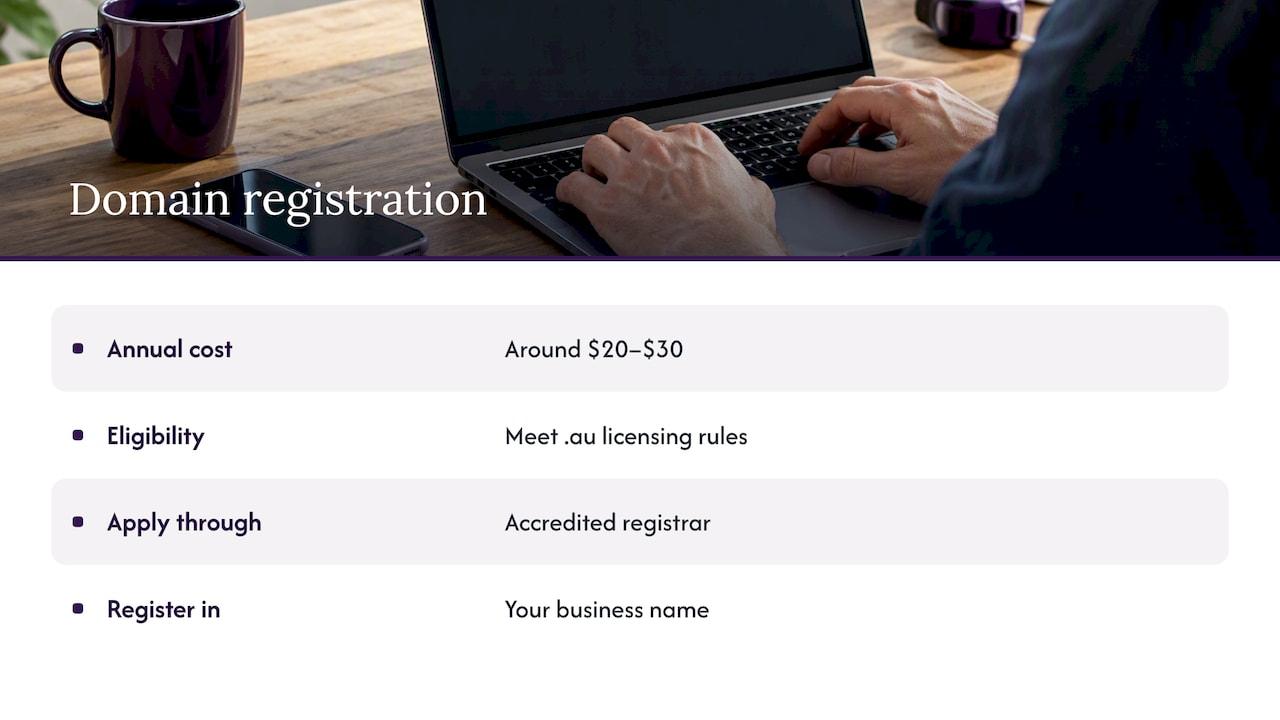
Your domain is your web address. The Australian domain administrator says a .au name costs around $20 to $30 a year on average, depending on the provider. Registering one also requires you to meet the eligibility rules in the .au licensing framework, and the auDA registration guide explains how to apply through an accredited registrar. Make sure the domain is registered in your business name, not the designer’s.
Hosting
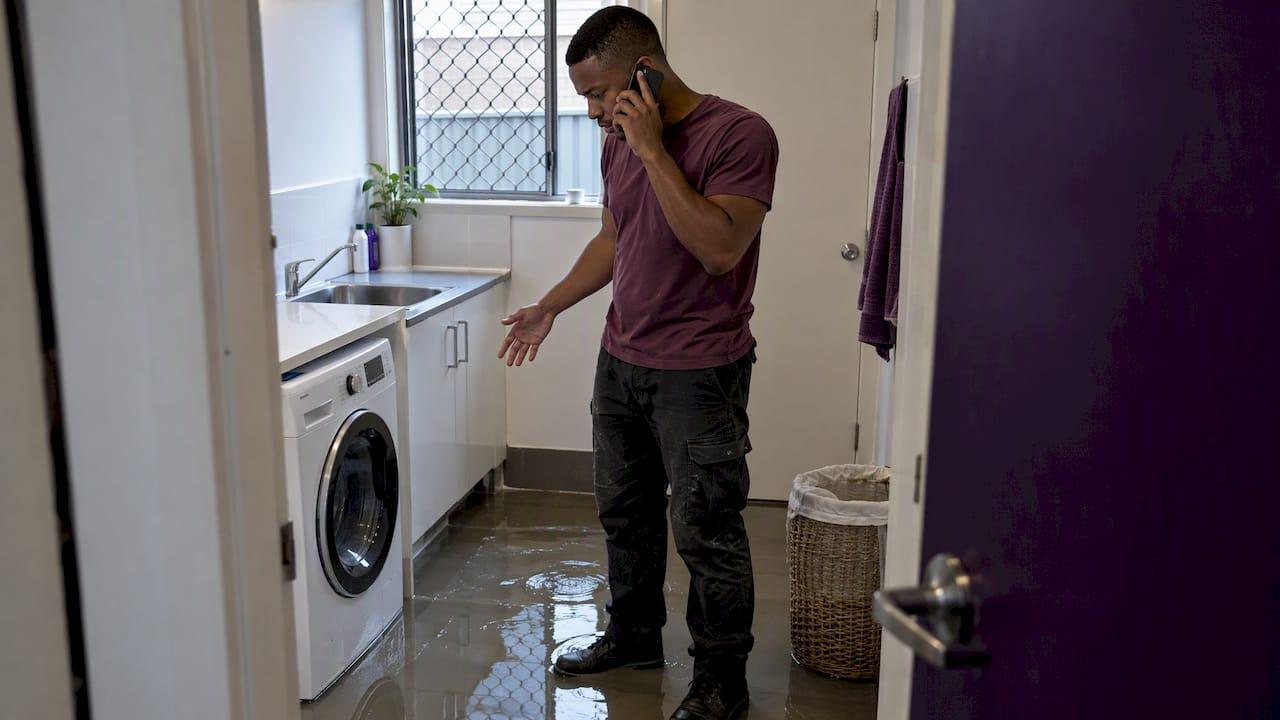
Hosting keeps the site online. Prices run from a modest monthly fee for basic plans to much more for managed setups. Cheap shared hosting can be slow, and a slow site loses people who are standing in a flooded laundry hoping to ring someone fast.
Maintenance and security
Hosting and maintenance are different things. Hosting keeps the lights on. Maintenance keeps software updated, backed up and secure. Some providers bundle both, which has one real advantage: when something breaks, one team owns the problem and nobody points at the other.
Changes and extras
New service? New phone number? Updated photos? Ask whether changes are included, billed hourly, or capped per month. This is the line item that surprises people most.
Business email
A yourname@yourbusiness.com.au address costs a little per user each year. It looks more credible than a free webmail account on a quote or invoice.
GST
Check every quote for “plus GST”. If your business is registered, you can generally claim it back, but you still need to know what the real number is. The ATO explains when a business needs to register for GST, including the turnover threshold. If you’re unsure how a website expense sits in your books, ask your accountant.
A worked example: three years, two quotes
Here’s why the three-year total matters. These numbers are made up to show the method, not to quote anyone.
- Quote A: $0 to start, then $150 a month on a 12-month minimum. Over three years: $5,400. You may not own the site.
- Quote B: $2,500 to build, then $60 a month for hosting and light maintenance. Over three years: $2,500 plus $2,160 = $4,660. You own the domain and files.
Quote A looked cheaper on day one. Quote B is cheaper over the life of the site and you keep the asset. Run this sum on every quote, and add the cost of any changes you expect to make.
How to judge a quote
Before you sign, get answers to these in writing:
- Who owns the domain and the site files? The answer should be you.
- What’s the page list? Names, not “up to five pages”.
- Who writes the copy and finds the photos? Your own job photos beat stock images every time. Our guide to managing job photos shows an easy way to collect them.
- What’s the minimum term and exit process? Can you leave, and can you take the site?
- What’s included each month? Hosting, backups, security updates, small edits.
- How will you know it’s working? You want call and form tracking, not just a nice design.
Be wary of impossible speed
A fully built, search-ready, professional site in a couple of days usually means shortcuts: thin content, generic structure, no local research. A good site needs your real services, areas and proof. For a look at what a quality, bookable site is made of, see this guide to a booking-ready website, then hold any quote up against it.
Cheap isn’t always cheap
Low build fees often hide costs elsewhere: no technical search setup, slow mobile performance, or maintenance billed separately. A site that doesn’t get found has a cost too, and it shows up as jobs you never heard about. We’ve covered that in more detail in the cost of not having a website.
Our perspective: price the site against the jobs it wins
We build for tradies and we talk to them daily. Here’s how we think about it.
A website isn’t a brochure. It’s a way for someone with a leaking tap or a dead switchboard to find you, trust you and reach you in under a minute. So the right question isn’t “what’s the cheapest site?” It’s “what’s one extra job worth to me?” If your average job is worth a few hundred dollars or more, a site that brings in even a small number of extra jobs a year changes the maths.
But a good site only helps if you pick up. Tradies are on a roof, under a house or up a ladder when the phone rings, and the caller rings the next name on Google. That’s why we pair website work with a voice-first assistant that answers calls and pre-qualifies leads while your hands are full. A site gets the call. Hayley makes sure it doesn’t go to voicemail.
And keep it simple. For most trades, a clean one-page site with clear services, areas, photos, reviews and a big call button does the heavy lifting. You can always add pages when the work justifies it.
— Hayley
Our One Page Website option
If you want a straightforward site without learning a new tool, our One Page Website is built for Australian tradies: clear services, your service areas, a call button and an enquiry path. We don’t publish a fixed price, so get in touch through our site and we’ll scope it around your trade.
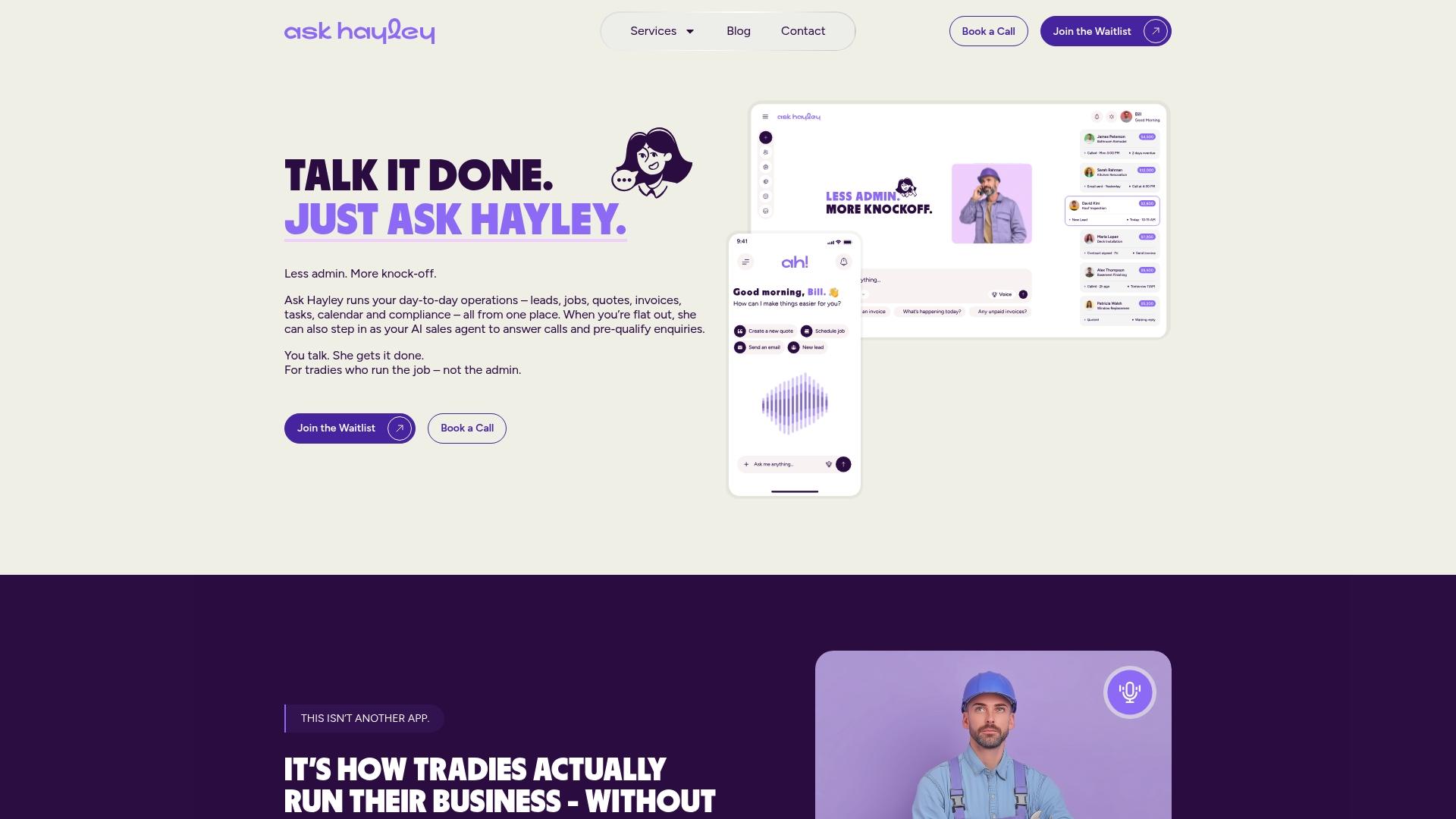
It works alongside the rest of what we do, including call answering and lead capture, so enquiries from the site don’t get lost.
Making the site pay for itself
A site is cheaper per job when it’s set up to convert. Four habits help:
- Put the phone number at the top and make it tappable on mobile.
- Show real work. Before and after photos, and a line about the suburb.
- State your terms plainly. Clear quote terms reduce back-and-forth. See our guide to protecting price and deposits.
- Price your jobs properly before the enquiries arrive. More leads only help if you’re not underquoting. Our post on five costs to include in every quote covers it.
If you’re also thinking about adding a chat tool, our comparison of live chat and chatbots can help you decide whether it’s worth the extra.
When to spend more, and when not to
Spend more if you run multiple trades or crews, bid on commercial work, sell high-ticket jobs, or compete in a crowded city where many local pages are needed.
Spend less if you’re a sole trader getting most work from referrals and just need a credible place to send people.
Don’t pay extra for: a flashy animation, a blog you’ll never update, or a long list of pages with copied text.
FAQ
How much should a tradie pay for a website?
For a professionally built five-page site, most tradies are best served in the low-to-mid four-figure range, plus a modest ongoing fee. Go lower and you’ll usually do more of the work yourself. Go higher only if your business needs custom features.
Is a monthly-fee website better than paying up front?
Not necessarily. A monthly plan spreads the cost, but the total over three years can exceed a one-off build with a small hosting fee. Compare the three-year total and check whether you can take the site if you leave.
What ongoing costs come after launch?
Expect a domain renewal (around $20 to $30 a year for a .au name), hosting, and optionally maintenance and business email. Ask whether small content changes are included or billed separately.
Can I build my own tradie website?
Yes, with a drag-and-drop builder. The dollar cost is low, but expect many hours of setup and learning, and you’ll write all the copy yourself. It suits sole traders who enjoy it and have the time.
Do I need a website if I get work from Facebook and referrals?
It helps. People who hear your name from a mate will often search for you before they call, and a simple site with your services, areas and number backs up the referral.


